


.
So… Weed Stocks Can Still Rally?
Don’t forget to cast your vote 👇
A policy rumor just lit up an entire sector.
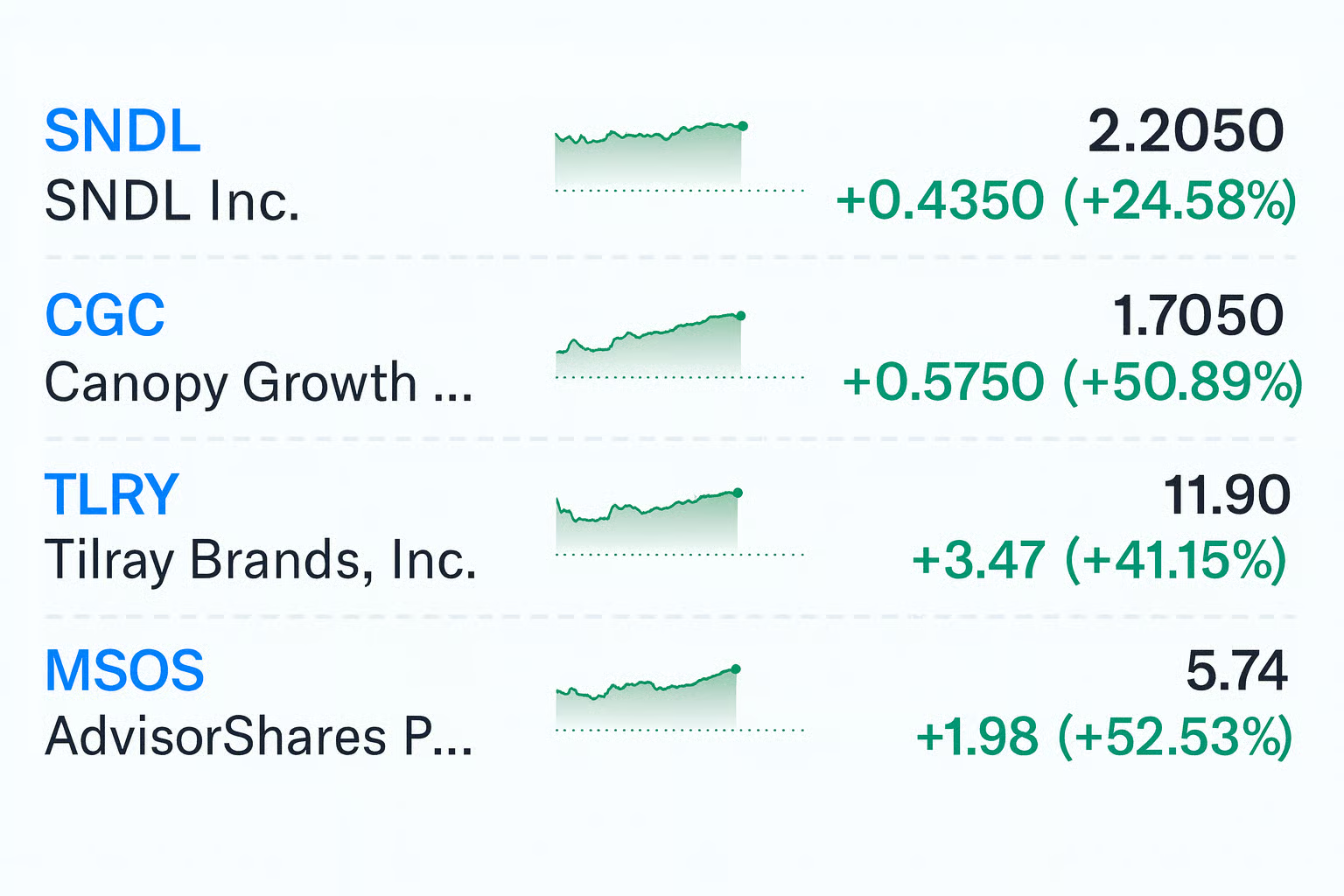
Cannabis names ripped higher after reports that the Trump administration is preparing an executive order to reclassify marijuana, a shift that would instantly make U.S. operators more profitable by removing their two biggest structural headwinds: punitive taxation and restricted banking.
The Washington Post broke the story Thursday evening; multiple outlets confirmed. A White House official maintained that “no final decisions have been made.” Markets ignored the caveat.
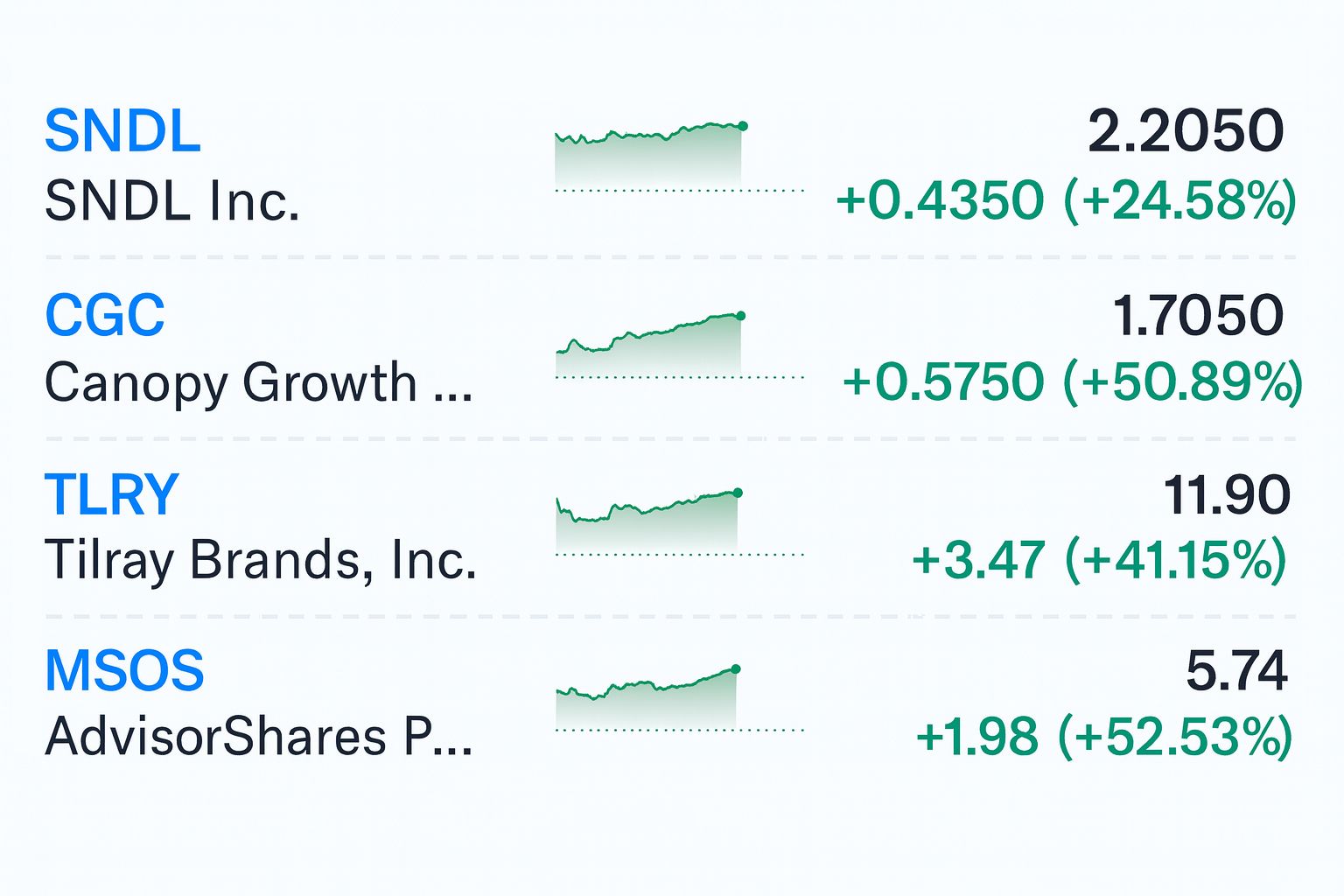
Midday — 1:20pm CDT
A sector that has spent years suffocating under federal contradictions finally caught a bid big enough to matter.
But here’s the real story:
This isn’t the first time reclassification has been floated — it’s the most credible the rumor has ever been.
Let’s break down why this move happened, what the rumors actually imply, and why history says the market may be pricing hope, not certainty.
1) Reclassification = A Regulatory Earthquake
Marijuana is currently a Schedule I drug, grouped with heroin and LSD.
Moving it to Schedule III would:
- Eliminate the 280E tax burden that destroys margins
- Expand access to banking and mainstream lenders
- Enable medical research pathways
- Legitimize financial reporting and institutional ownership
Reclassification doesn’t legalize cannabis nationwide — but it pulls the industry out of regulatory purgatory.
For U.S. operators, this isn’t sentiment. It’s math.
2) Why the Market Reaction Was So Extreme
Because the cannabis sector has been absolutely crushed:
- Tilray down 15% YTD
- Canopy down 40% over three years
Even in Canada — legal since 2018 — Canopy has never posted a profit.
Sentiment was already priced like the industry was in terminal decline.
One regulatory headline acted like a match in a room full of dry kindling.
And that’s what traders are betting on:
the possibility of a regime change, not the guarantee.
3) Normally, “reclassification chatter” is noise
This round is different. A consistent narrative emerged across major outlets:
- Trump met with major industry executives Wednesday
- HHS Secretary RFK Jr. and CMS head Mehmet Oz were present
- The meeting reportedly included a direct call to Speaker Johnson
- Executives pushed; Trump appeared persuaded
Multiple outlets confirm the same narrative: this isn’t speculation — it’s a structured internal discussion.
In this sector, expectations drive price.
A higher chance of reform = higher prices, even without confirmation.
4) What Schedule III Fixes — Immediately
A) 280E taxation:
Cannabis companies can’t deduct ordinary business expenses. Schedule III eliminates this overnight.
B) Banking access:
Limited lending, high borrowing costs, no bankruptcy protections. Rescheduling attracts banks, lowers capital costs, and changes balance-sheet risk.
In other words:
Rescheduling is not legalization — but it’s the first time profitability becomes structurally possible.
5) We’ve Heard This Before
Trump has teased this decision multiple times and cannabis reform has repeatedly died in Congress.
Each time, cannabis stocks behave the same way: a spike… then reality reasserts itself.
Why? Because reclassification still requires months of procedural steps:
- DOJ rulemaking
- DEA review
- Public comment
Even with an executive order, nothing becomes immediate.
6) Hope Is a Catalyst — Until It Isn’t
This is a classic policy-volatility repricing event:
- The rumor surfaced with institutional credibility
- The market had deeply discounted the probability
- The sector is under-owned and structurally impaired
- A single regulatory catalyst changes cash flow math
The Takeaway
The market isn’t celebrating legalization.
It’s repricing the probability of profitability.
Reclassification won’t solve everything — but it removes the most suffocating structural barriers. A sector that hasn’t had a real catalyst in years just got one.
Got a market or stock you want us to analyze next?
Drop your request in the comments.
Was this email forwarded to you? Subscribe.
❗ P.S. — If you no longer want these emails, click “Unsubscribe” in the email footer.

DAILY
Level Up Your Trading IQ, For Free!
No More Guesswork,
Just Trading Bliss.✨


