


It sounds simple but it isn’t.
One of our readers, sent us a note yesterday that stopped us mid-scroll.
” I started driving in the late ’70s and can remember the odd or even days. Whatever your license plate ended with an even or an odd number then that was the day you could get gas.“
Shea, you just described the last time the world ran out of patience with the Middle East and oil in the same sentence.
And here we are again.
→ Brent crude briefly topped $118 this morning.
→ European gas prices spiked 30% overnight.
And markets are repricing everything. Fast.
But to understand why, we need to take a quick detour into Oil 101. Don’t worry. It’s actually interesting.
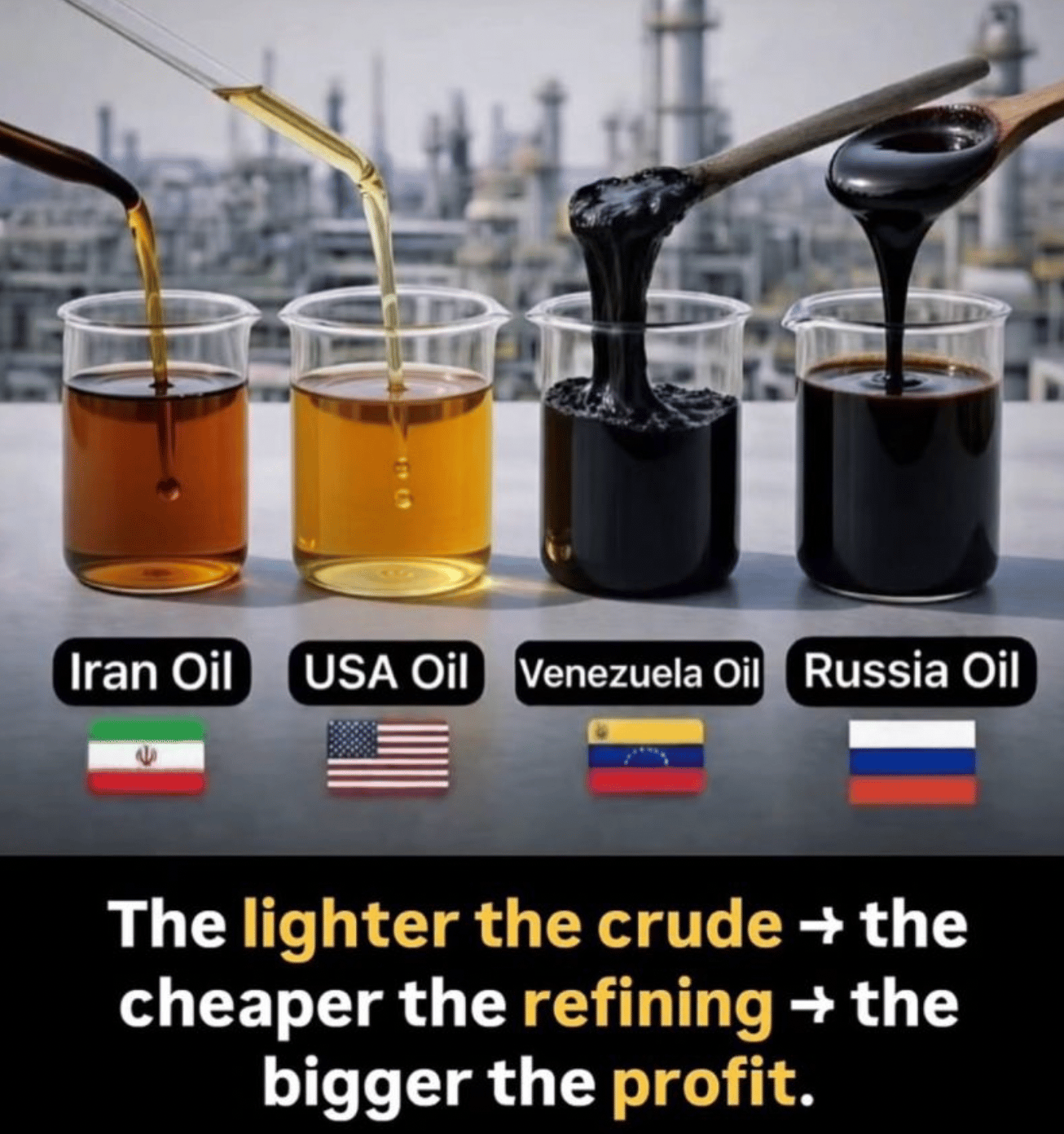
Not all oil is the same. And right now, that difference is worth $50 a barrel — the widest gap ever recorded for the same underlying commodity.
Here’s the story ⇩
So What Even Is “Crude”?
Everyone keeps saying crude is up.
Up is doing a lot of heavy lifting in that sentence.
Because there isn’t one crude oil. There are dozens. And right now, depending on which crude you’re talking about, you’re looking at completely different crises unfolding simultaneously.
Think of it like coffee.
Ethiopian single-origin and Brazilian blend are both coffee. Same plant, different soil, different price, different buyer. Nobody calls them separate commodities. But a trader can tell you exactly why one costs $50 more than the other today.
Here’s your cheat sheet:
Crude oil — the broad category. Like saying “coffee.” Means nothing until you specify which one.
WTI (West Texas Intermediate) — American crude. Pulled from fields in Texas, Oklahoma, New Mexico, Louisiana, and North Dakota. The lightest and sweetest of the major benchmarks. Sweet means low sulfur content — easier and cheaper to refine into gasoline. (Not sweet as in tasty. Please don’t taste crude oil.) Travels by pipeline to Cushing, Oklahoma. Landlocked. Stays mostly domestic. Currently trading around $95.80 — up a modest 0.3% today.
Brent — North Sea crude. Slightly heavier. Sits on the water, loads onto tankers, moves freely to refineries across Europe and Asia. The global benchmark. When the news says “oil hit $100” — they mean Brent. Briefly topped $118 this morning before pulling back to around $113.
Oman crude — Middle Eastern crude. Heavier still. Historically priced close to Brent. Now trading at a massive premium because it’s physically trapped on the wrong side of a war zone.
That WTI-Brent spread – just $5 at the end of February – has now blown out to over $20. And the gap between WTI and Middle Eastern crude benchmarks is even wider. Over $50 — with Oman trading near $153 while WTI sits below $96.
Same commodity. Completely different crisis depending on where you are.
(The market is essentially charging a geographic tax for being on the wrong side of a 21-mile strait.)
SPONSOR BREAK presented by ParadigmPress*
Jim Rickards: “This AI Giant is About to Go Bust”
Jim Rickards just released shocking new research predicting this AI giant is about to go bust…
Trigging a full-blown AI meltdown that could wipe out 80% of the stock market.
He says this could be 10 times bigger than Lehman Brothers.
Click here to get the name of this company, completely free of charge….
And learn the five steps he’s recommending you take.
Why Brent Is Exploding While WTI Stays Relatively Calm
Here’s the mechanism…
The Strait of Hormuz is 21 miles wide at its narrowest point. Through it flows roughly 20% of global seaborne oil trade — primarily from Saudi Arabia, the UAE, Iraq, and Qatar.
It is now effectively closed.
Not through a physical blockade — through something almost more powerful. Insurance withdrawal is doing the work that a physical blockade has not. The outcome for cargo flow is largely the same. Premiums have made transit economically unviable for most commercial operators. The strait is technically open. Almost nobody is using it.
Hundreds of tankers sit idle on both sides.
WTI doesn’t care. American oil moves through pipelines. It never needed the strait. Refiners in Cushing are fine.
Brent is a different story entirely. Disruptions in the Strait quickly reduce availability for refineries in Europe and Asia, leading to higher bids for seaborne oil. WTI remains more sheltered, reflecting domestic production and local inventory levels that haven’t tightened similarly.
So global refiners – desperate for barrels that don’t require crossing a war zone – are bidding Brent up to wherever it needs to go to find supply.
And it keeps going up.
Who’s Actually Getting Hurt
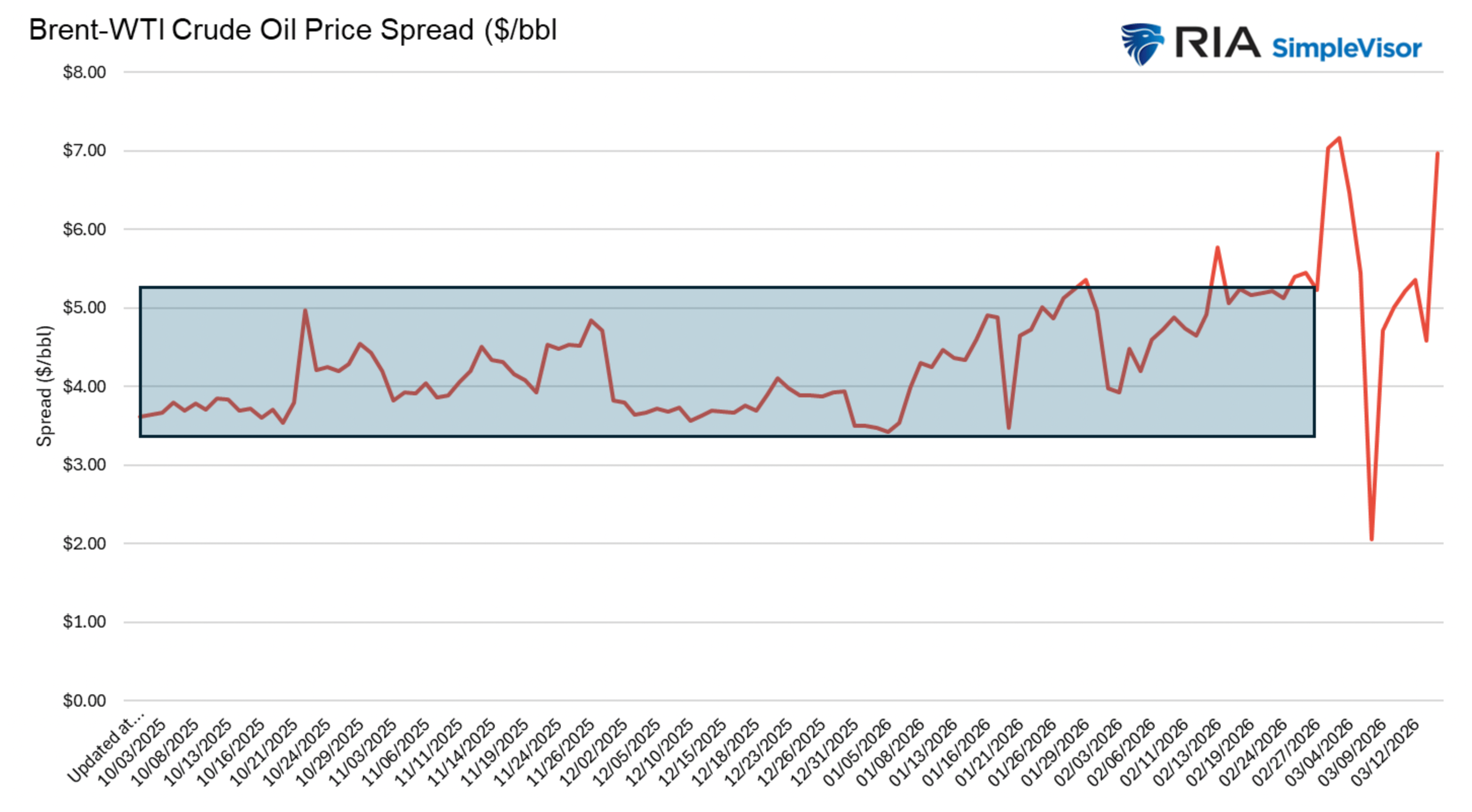
Here’s what the WTI-Brent spread is really telling you.
It’s a real-time map of who’s exposed to this crisis — and who isn’t yet.
Wide spread = the world is fracturing along energy lines.
Right now that spread is the widest it has ever been.
And the countries feeling it hardest aren’t in Europe or America.
84% of the oil that flows through the Strait of Hormuz goes to Asia. China gets a third of its total oil supply through that strait. Japan, South Korea, India — same story.
They’re not paying $96 for a barrel. They’re paying $152. And climbing.
Analysts warn that the longer the Strait stays closed, the more Asia’s supply shortage becomes everyone’s problem. Supply chains don’t respect national borders. The factories making your phone, the ships bringing your goods, the airlines pricing your flights – they all run on Brent-priced oil.
The gap that looks like a trading signal today could be the early warning of a global problem tomorrow.
Watch the spread.
SPONSOR BREAK presented by BehindTheMarkets*
The 1979 Iran crisis helped ignite gold’s greatest bull run in history.
Gold set 54 all-time highs that year.
The mining stocks?
They exploded 1,000%… 3,000%… even 13,000%.
History doesn’t always repeat, but it often rhymes.
One company, right now, is sitting on more gold than the national reserves of most G7 nations…
And it’s still trading at a 99% discount to what it’s actually worth.
But here’s the twist.
Over 60% of U.S. refineries were built to process heavy crude — the kind imported from Canada, Mexico, and the Middle East. Not the light shale oil American wells are pumping at record levels right now. So the U.S. exports its own light crude to refineries abroad that can use it efficiently, and imports heavy crude from elsewhere to feed its own refineries.
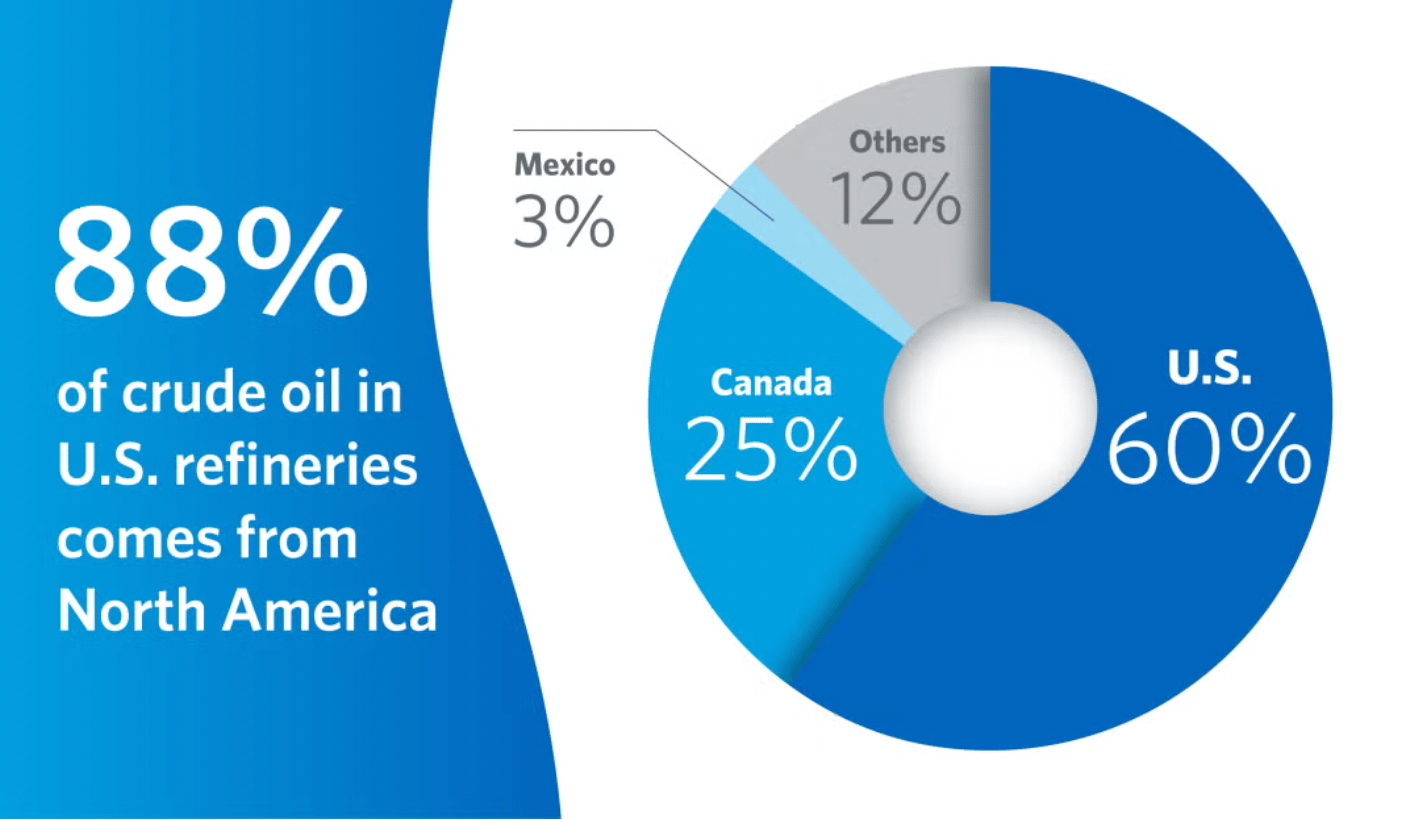
source: AFPM
America is simultaneously an oil exporter and an oil importer.
Which is also why any talk of simply keeping more U.S. oil at home tends to sound better than it works.
At first glance, restricting exports seems logical. If energy prices are rising, why not keep more American crude inside the country and lower costs at the pump?
Because that’s not how the system is built.
The U.S. now produces massive volumes of light, sweet shale oil — the kind many refineries abroad are happy to process. But many American refineries, especially along the Gulf Coast, were designed decades ago to run heavier, sour crude imported from places like Canada and Mexico.
So forcing more domestic crude into the U.S. market wouldn’t magically lower gasoline prices. It would widen the discount between WTI and Brent, distort refinery economics, and leave refiners with more of the wrong kind of oil.
In other words: more barrels at home doesn’t automatically mean cheaper fuel.
Sometimes it just means a bigger mismatch.
And then there’s gold.
Usually when everything breaks, gold goes up. That’s the script.
Not today.
→ The SPDR Gold ETF fell ▼ 4.80%.
→ iShares Silver Trust dropped ▼ 5.90%.
Why?
The speed of the Iran war energy shock has nudged traders to completely reprice whether the Federal Reserve can deliver any rate cuts this year. Yields on shorter-maturity US Treasury notes shot higher — reflecting expectations for tighter monetary policy. And Fed Funds futures now suggest traders no longer see the Fed cutting rates in 2026 at all.
Implied odds of a June cut plummeted from 60% on February 23 to just 16% this morning.
So why does that kill gold?
Normally gold is seen as a hedge on inflation — which might suggest it should rise alongside expectations for persistent price increases. But longer-term Treasury yields actually fell on Thursday — suggesting the market thinks a Fed shift toward inflation-fighting would likely result in some decline in growth and inflation over time. Less future inflation means less need for inflation hedges.
In plain English: the market isn’t just pricing in an energy shock.
It’s pricing in a Fed that gets so aggressive about fighting inflation that growth slows down on the other side.
Less growth. Less inflation eventually. Less need for gold (maybe?).
The mining stocks are already feeling it.
→ Anglogold Ashanti › ▼ 7.38%
→ Newmont › ▼ 7.67%
→ Wheaton Precious Metals › ▼ 5.48%
→ Agnico Eagle › ▼ 5.66%
The market isn’t panicking about the crisis itself.
It’s calculating what comes after it.
SPONSOR BREAK presented by TheOxfordClub*
Get “Backdoor Access” BEFORE the SpaceX IPO
When SpaceX goes public, it could hit a $1.5 TRILLION valuation – that would be 3,000 times bigger than Amazon’s IPO.
Most investors will be locked out until AFTER the big announcement.
But I’ve discovered a “backdoor” that lets you grab a pre-IPO stake in SpaceX right now.
I’m revealing the ticker for free.
What To Watch From Here

Nobody knows how long the strait stays closed.
Nobody knows if the attacks on Qatar’s LNG facilities are a one-time escalation or the opening move of something bigger.
What we do know is what to watch.
✓ Watch the WTI-Brent spread. It’s the most honest signal in the market right now. Widening means the fracture is deepening. Narrowing means supply is finding its way back. You don’t need to follow fifteen indicators. Just watch the spread.
✓ Watch European gas prices. Dutch TTF futures spiked 30% overnight. Europe is the most exposed major economy after Asia. If TTF starts cooling, it means Qatari LNG is finding workarounds. If it keeps climbing, winter in Europe gets very expensive very fast.
✓ Watch the Fed language. Rate cut odds just collapsed from 60% to 16% for June. If Powell starts signaling that the energy shock is temporary and transitory, markets will reprice cuts back in fast.
✓ The spread. We said it once. We’ll say it again.
It’s the thermometer. Everything else is just noise around it.
Don’t forget to to cast your vote 👇
Lesson Of The Day:

Was this email forwarded to you? Don’t miss out on future stories — subscribe using the button below.
Also, help your friends blossom this spring! Share us with them.
💬 We Want To Hear Your Story:
Got a market or stock you want us to analyze next?
Just drop your request in the comments here.
❗ P.S. – If you no longer want to receive occasional emails from us and you want to unsubscribe, click here 👉 “Unsubscribe” . Thank you!


