


CATEGORY
Getting started
See You Wednesday 4:01pm
All In. 🃏

In poker, going “all in” means one thing.
You’re not hedging or folding. You’re pushing every chip you have to the middle of the table and telling everyone else in the room: I believe in this hand more than you believe in yours.
This Wednesday at 4:01pm, four of the most powerful companies on Earth are turning their cards over.
1 Microsoft.
2 Alphabet.
3 Meta.
4 Amazon.
They’ve already gone all in.
$670 billion committed to AI infrastructure this year alone.
→ More than Sweden’s entire GDP.
→ More than America’s entire defense budget.
→ The largest single-year capital expenditure in the history of business.
Wednesday is when we find out if the hand was worth playing.
Here’s the story ⇩
SPONSOR BREAK presented by OxfordClub*
Only Hours To Go: Elon’s Biggest Move Ever?
After meeting Elon Musk and analyzing months of research…
Former CIA consultant Dr. Mark Skousen believes June 2026 a potential SpaceX IPO announcement could take place.
He found an “access code” that could let you get exposure ahead of it.
Learn how to claim your stake before time runs out.
What $670 Billion Actually Looks Like.
To understand what $670 billion actually means, you need to understand what these companies are building.
Every time you use ChatGPT, ask Gemini a question, or get a recommendation from an AI — somewhere, a data center full of chips is doing an enormous amount of work. And those data centers need to be built, cooled, powered, and staffed.
They need:
→ land,
→ fiber,
→ electricity,
→ and above all else — chips… Nvidia chips. Lots of them.
The four hyperscalers have been building these warehouses at a pace that should make your head spin:
→ Microsoft MSFT ( ▲ 0.38% ) : ~$146 billion in capex this year — up 89% from last year
→ Alphabet GOOG ( ▼ 0.37% ) : $175-185 billion — double what it spent in 2024
→ Meta META ( ▼ 0.97% ) : $115-135 billion — Zuckerberg called it “a defining investment”
→ Amazon AMZN ( ▼ 0.73% ) : expected to cross $170 billion
→ Combined: $670 billion
→ For context: Alphabet’s entire capex five years ago was $22 billion
Goldman Sachs estimates AI investment will drive roughly 40% of all S&P 500 earnings growth in 2026.
That’s not a side bet. That’s the whole thesis.
SPONSOR BREAK presented by BehindTheMarket*
“Forget AI” Says Reagan’s #1 Futurist
While everyone’s chasing the same AI plays, George Gilder is focused on something completely different.
He says a 4-nanometer device that’s 80 MILLION times more powerful than the chip he gave Reagan is now being made in America for the first time.
And he’s identified 3 companies that control this technology.
Get the details before this BOMBSHELL announcement changes everything.
The Nervous Table.
Here’s what happened today — the day before the cards flip.
The Wall Street Journal published a report raising questions about whether OpenAI’s growth can actually support the massive data center spending commitments companies have made around it. Just a question mark showing up at the table at the worst possible moment.
The chip market answered immediately.
The PHLX Semiconductor Index had just finished an 18-day winning streak — 13 straight record highs at the end of the run. Today, it fell 3.16% in a single session. The names that ran the hardest got hit the hardest:
→ CoreWeave $CRWV ( ▼ 5.83% ) : down 3.86%
→ Oracle $ORCL ( ▼ 4.05% ) : down 3.56%
→ Nvidia $NVDA ( ▼ 1.59% ) : down 1.32%
→ Rambus, Arm, FormFactor, Wolfspeed: all under pressure
→ Even Intel — up 100% since March 30 — got pulled into the selloff
This is what happens at a poker table when someone starts to wonder if the player who went all in is bluffing — the whole table gets nervous.
Nobody has folded yet. But everyone is watching very carefully.
SPONSOR BREAK presented by BehindTheMarket*
Hate It Or Love It — Fortunes Will Be Made From This…
President Trump just signed a highly controversial new law — S.1582.
With one stroke of the pen, he’s unleashed the most radical change to America’s money in over 100 years.
Investors who understand what’s happening and position themselves now could make as much as 40X their money by 2032.
While the rest will be left scrambling in the dust, wondering how they missed it.
Go here now for details – before the wealth transfer begins on June 11th.
Wednesday At 4:01pm.
Reddit’s WallStreetBets has already named it: “the REAL WW3 on Wednesday at 4:01 PM.”
They’re not wrong about the stakes.
When Microsoft, Alphabet, Meta, and Amazon all report after the bell on Wednesday — simultaneously — the market will be laser focused on one number.
→ Capex guidance.
If these four companies raise their AI spending plans — or even hold them steady — it’s the market equivalent of flipping over a royal flush.
The chip stocks that sold off Tuesday come roaring back. The AI trade extends. The $670 billion wasn’t a bluff.
If even one of them softens the language — uses words like “digestion” or “optimization” or “measured investment pace” — the table goes quiet very fast. Traders start pressing the names that ran the farthest and today’s selloff becomes something more serious.
What to watch on Wednesday:
→ Azure growth consensus: ~38%
→ Google Cloud growth consensus: ~28%
→ AWS growth consensus: ~18%
→ Meta ad revenue: watching price per ad closely
→ Free cash flow: Alphabet’s expected to drop 70% as spending surges
→ Any softening in capex language: the most dangerous two words this week are “we’re optimizing”
SPONSOR BREAK presented by ParadigmPress*
AI could wipe out Social Security funding by 2027?
Most people have no idea this is happening…
But AI could gut the funding base for Social Security by the end of 2027…
Leaving millions of American seniors funds completely vanished.
But former $4 billion hedge fund legend has seen what’s coming and put together a presentation detailing exactly how AI could collapse the funding base for social security and what to do as AI turns the economy upside down…
Click here to see his three recommended moves.
Pot Committed.

The $670 billion is already flowing — into data centers, into chips, into cooling systems and fiber cables and land.
The hand is already played. The chips are already in the middle.
Wednesday is just the moment everyone turns their cards over.
If the capex holds — or rises — the table relaxes and the game continues. If it softens, the next few months get very interesting.
Either way, nobody at this table is getting their chips back.
Don’t forget to to cast your vote 👇
Lesson Of The Day:

Was this email forwarded to you? Don’t miss out on future stories — subscribe using the button below.
Also, help your friends blossom this spring! Share us with them.
💬 We Want To Hear Your Story:
Got a market or stock you want us to analyze next?
Just drop your request in the comments here.
P.S. – If you no longer want to receive occasional emails from us and you want to unsubscribe, click here 👉 “Unsubscribe” . Thank you!
Show Me The Money
The Verdict.

Intel walked into the bond market this week asking for $6.5 billion.
Wall Street sent back $50 billion.
That’s a verdict.
Seven times the amount requested, from the most serious, least excitable investors on Earth — pension funds, insurance companies, sovereign wealth funds. People who don’t get carried away. People who do the math and check the books.
This week three companies found out their verdict:
1 Intel got a standing ovation.
2 Walmart got a nod.
3 And Boaz Weinstein found out that even distressed investors have their limits.
Here’s the story ⇩
SPONSOR BREAK presented by OxfordClub*
Elon Musk: “The Only Thing That Can Solve It”
In a bombshell interview, Elon Musk declared that AI and robotics are “the only thing” that can solve America’s $38 trillion debt crisis. He predicts it will happen within three years. One Wall Street veteran has identified a single fund at the center of this AI buildout – and you can get in for less than $20.
See what Musk didn’t tell you >>
Intel: Everyone Was Wrong.
A year ago, Intel was the cautionary tale everyone in tech was pointing at.
Layoffs. A new CEO. Analysts quietly writing the obituary.
The company that invented the modern processor somehow missed the biggest technology wave in a generation while Nvidia became the most valuable company on Earth. If you wanted to explain what happens when a giant falls asleep, you pulled up Intel’s stock chart.
Here is what everyone missed.
AI data centers are not just Nvidia GPU farms. They need CPUs — the generalist chips that run the actual services, handle the requests, and turn all that AI software into something businesses can charge money for. Think of GPUs as the engine and CPUs as everything else that makes the car actually drive.
Intel makes those.
And as companies started building out their AI infrastructure for real, Intel’s Xeon server processors went from an afterthought to something nobody could do without.
Last week Intel’s current-quarter sales forecast shattered Wall Street expectations. Shares hit a record high. And this week they went to the bond market to raise $6.5 billion — to buy back the 49% stake in their Irish chip factory they sold to Apollo Global Management in 2024 when they desperately needed cash.
Wall Street sent back $50 billion.
→ Bond size: $6.5 billion
→ Orders received: $50 billion — 7.7x oversubscribed
→ Maturities: 5 to 40 years
→ Longest note: due 2066, priced tighter than expected
→ Use of proceeds: buy back Irish Fab 34 from Apollo
→ Intel shares: at a record high
→ US government: holds 10% stake in Intel
The company that sold its factory to survive just bought it back.
And Wall Street lined up around the block to help.
SPONSOR BREAK presented by OxfordClub*
Only Hours To Go: Elon’s Biggest Move Ever?
After meeting Elon Musk and analyzing months of research…
Former CIA consultant Dr. Mark Skousen believes June 2026 a potential SpaceX IPO announcement could take place.
He found an “access code” that could let you get exposure ahead of it.
Learn how to claim your stake before time runs out.
Walmart: The Nod.
Walmart didn’t need to do anything dramatic this week.
It never does.
The world’s largest retailer walked into the bond market asking for $3 billion and left with $4.25 billion — at a lower rate than it asked for.
During the sale process, Walmart’s borrowing costs actually went down because demand was so strong. The longest tranche priced at 0.43 percentage points above Treasuries, roughly a quarter point less than initial price talk.
That’s what happens when you are so reliable, so consistent, so utterly unshakeable that the bond market doesn’t even make you sweat.
Walmart has $648 billion in annual revenue, stores in every zip code, and a business model that grows whether the economy is booming or collapsing.
Walmart raised $4.25 billion this week. They asked for $3 billion.
The extra $1.25 billion? General corporate purposes.
→ Initial target: $3 billion
→ Final raise: $4.25 billion
→ Borrowing cost: went DOWN during the sale
→ Longest tranche: 0.43 points above Treasuries — well below initial talk
→ Part of a $24.3 billion investment grade Monday session
→ Last bond sale: $4 billion in April 2025
Walmart’s verdict came back in about thirty seconds.
“Obviously. Next.”
SPONSOR BREAK presented by ParadigmPress*
AI could wipe out Social Security funding by 2027?
Most people have no idea this is happening…
But AI could gut the funding base for Social Security by the end of 2027…
Leaving millions of American seniors funds completely vanished.
But former $4 billion hedge fund legend has seen what’s coming and put together a presentation detailing exactly how AI could collapse the funding base for social security and what to do as AI turns the economy upside down…
Click here to see his three recommended moves.
Boaz Weinstein: The Limits Of Pessimism.
Boaz Weinstein runs Saba Capital Management, he has a reputation for finding value where others see disaster. His whole business model is finding funds where investors are trapped, and quietly desperate — then offering to buy them out at a discount before things get worse.
He is essentially a professional pessimist. 🙂
This time he thought he found it in Blue Owl Capital Corp. II — one of Blue Owl’s private credit funds.
The private credit market has been under real stress.
– Concerns about loan quality.
– AI disruption eating into software company revenues.
– A rough stretch for non-traded funds.
Blue Owl even told investors in February they could no longer redeem shares quarterly — which is the kind of news that usually sends investors running for the exit.
!!! And still…less than 1% of investors said yes.
The tender offer expired last week with almost no takers.
Actually, the story is pretty simple→ Investors looked at Weinstein’s offer, → looked at their Blue Owl position, → and decided they’d rather wait than sell at a discount to someone who was betting against them.
→ Weinstein’s next move: eyeing Cliffwater and Blue Owl Credit Income Corp.
→ New position: $40 million in publicly traded FS KKR Capital Corp.
Weinstein was buying pessimism. → Turns out there wasn’t enough of it to go around.
Don’t forget to to cast your vote 👇
Read The Room.
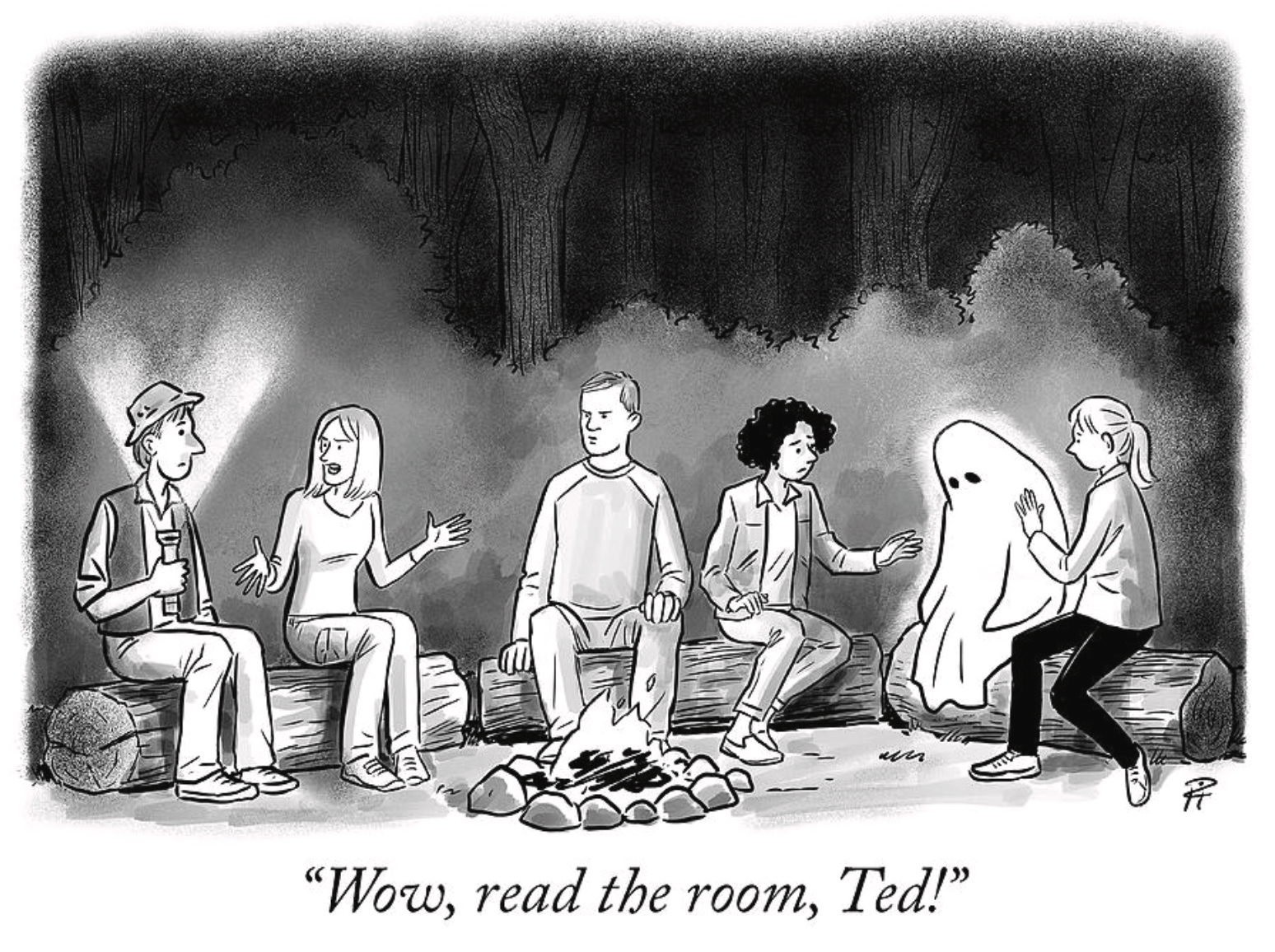
The bond market doesn’t care about press releases, vision deck or exciting strategic pivot.
It asks one question: do we trust you with our money for the next 5, 10, 40 years?
This week Intel said “we’re back” and got believed.
Walmart said nothing and got everything it asked for.
And Boaz Weinstein learned that even stressed investors have a floor below which they won’t go.
Three verdicts. Three very different answers to the same question.
Lesson Of The Day:
Was this email forwarded to you? Don’t miss out on future stories — subscribe using the button below.
Also, help your friends blossom this spring! Share us with them.
💬 We Want To Hear Your Story:
Got a market or stock you want us to analyze next?
Just drop your request in the comments here.
P.S. – If you no longer want to receive occasional emails from us and you want to unsubscribe, click here 👉 “Unsubscribe” . Thank you!
The Sexiest IPO-s
Unsexy?

Two completely unsexy businesses just had the sexiest IPO week of 2026.
One has been making sandwiches in New Jersey since 1956. The other makes uranium pellets the size of a poppyseed.
No algorithms or AI wrapper. No founder in a black turtleneck telling you they’re changing the world.
Just sandwiches and atoms.
Between them they raised over $13 billion this week.
And Wall Street — the same Wall Street that spent the last five years throwing money at anything with “AI” in the name — couldn’t write the checks fast enough.
Here’s the story ⇩
Don’t forget to to cast your vote 👇
The Bamboo Story.
Here is a fun fact about bamboo that most people don’t know.
Bamboo spends the first five years growing entirely underground. You water it every day, nothing appears above the surface, and most people would look at that patch of dirt and assume something went wrong. Then in year five it shoots up 90 feet in six weeks — the fastest growing plant on Earth, after what looked like nothing happening at all.
In 1956, a man named Mike opened a submarine sandwich shop on the Jersey Shore. Nothing fancy. Just a sub shop, freshly baked bread, the kind of place you go because the sandwich is really good.
1975, a 17-year-old kid named Peter Cancro who worked there convinced his football coach to loan him the money to buy it. He spent the next nine years running one sandwich shop in New Jersey before he started franchising. Nine years of freshly baked bread every day, the same way it had been done since the shop opened in 1956.
Nobody was writing about Jersey Mike’s in 1984. Or 1994. Or 2004.
Subway was everywhere. Arby’s was everywhere.
And Jersey Mike’s was just quietly watering its bamboo, building its root system one freshly baked loaf at a time, in a way that the giants had long since decided wasn’t worth the operational complexity.
The Root System.
While Subway was chasing global domination and Arby’s was expanding its menu and both were doing everything that fast food chains are supposed to do to win — Jersey Mike’s was doing one thing…
→ Making a better sandwich.
Freshly baked bread on premises. Every single day. Every single location. No shortcuts, no frozen loaves, no cutting corners on the thing that matters most in a sandwich shop. Peter Cancro spent 50 years obsessing over one detail that his competitors stopped caring about the moment they got big enough to cut costs.
In an industry that had spent thirty years optimizing for cost and convenience at the expense of everything else, Jersey Mike’s had spent thirty years optimizing for the sandwich.
The result:
→ Jersey Mike’s is now America’s third largest sandwich chain by store count
→ Added 275+ new stores every year for the last three years
→ Subway store count: down 3% in 2024
→ Arby’s store count: down 1% in 2024
→ Jersey Mike’s: still growing, announcing 400 new franchises across the UK and Ireland
That’s the root system. Invisible to everyone watching the surface. Absolutely everything underground.
The 90 Feet.
In January 2025, Blackstone paid $8 billion for Jersey Mike’s.
Fifteen months later, Jersey Mike’s confidentially filed for an IPO targeting a valuation of at least $12 billion, working with Morgan Stanley, JPMorgan, and Jefferies on the offering.
A $4 billion markup in fifteen months. On a sandwich shop.
The bamboo just went 90 feet.

And the giants who had every advantage — the ones with 16,000 more locations, the ones with bigger marketing budgets and global brand recognition and decades of scale — are shrinking while a sub shop from New Jersey is announcing 400 new franchises across the UK and Ireland.
Eli Manning and Danny DeVito are investors, by the way. 😉
Boring Is The New Brilliant.
Now forget the sandwich for a second.
X-Energy makes nuclear reactors – small and modular. The kind you can build over and over in a factory rather than spending fifteen years constructing on site. And their fuel — this is the part worth pausing on — comes in the form of Triso pebbles. Tristructural isotropic uranium kernels. The size of a poppyseed.
Each one burns hotter and longer than conventional nuclear fuel. And together they power a reactor that X-Energy’s CEO Clay Sell describes with a phrase you don’t normally hear in the nuclear industry:
“We want to make nuclear boring.”
Boring meaning repeatable.
Boring meaning predictable.
Boring meaning you can build it over and over and over again and drive costs down the way you drive costs down in any manufacturing business — through repetition, standardization, and scale.
The market heard “boring nuclear” and immediately got very excited.
The Numbers.
The IPO was more than 15 times oversubscribed. Meaning for every share available, fifteen investors wanted it.
→ IPO raise: $1.02 billion — upsized from the original target
→ IPO price: $23 per share, above the marketed range of $16 to $19.
→ Opening price: $30.11 on Friday morning — 31% above the IPO price
→ Market value: nearly $12 billion
→ Times oversubscribed: 15x
→ Key customers: Amazon, Dow, Centrica
→ ARK Investment Management: interested in buying up to $105 million at IPO price
→ Target: first reactor delivery by early 2030s
→ Use case: industrial facilities and AI data centers
Amazon is already a customer. Dow is already a customer. ARK wanted $105 million worth at the IPO price. The company lost $390 million last year on $94 million in revenue — but nobody seemed to care, because the order book is real and the technology actually works.
X-Energy isn’t profitable yet. But it has something most startups spend years chasing: customers who actually need what it’s building, in an industry — AI data centers — that is so hungry for power it will take nuclear energy from a poppyseed if that’s what it takes.
The Unsexy Truth.

Turns out the most dangerous thing in any industry isn’t the loudest competitor in the room. It’s the quiet one that never stopped caring about the thing everyone else decided wasn’t worth caring about anymore.
Fresh bread. Poppyseed uranium. $13 billion.
The boring ones win eventually. They always do.
Lesson Of The Day:

Was this email forwarded to you? Don’t miss out on future stories — subscribe using the button below.
Also, help your friends blossom this spring! Share us with them.
💬 We Want To Hear Your Story:
Got a market or stock you want us to analyze next?
Just drop your request in the comments here.
P.S. – If you no longer want to receive occasional emails from us and you want to unsubscribe, click here 👉 “Unsubscribe” . Thank you!
The Sexiest IPO-s
Unsexy?
Two completely unsexy businesses just had the sexiest IPO week of 2026.
One has been making sandwiches in New Jersey since 1956. The other makes uranium pellets the size of a poppyseed.
No algorithms or AI wrapper. No founder in a black turtleneck telling you they’re changing the world.
Just sandwiches and atoms.
Between them they raised over $13 billion this week.
And Wall Street — the same Wall Street that spent the last five years throwing money at anything with “AI” in the name — couldn’t write the checks fast enough.
Here’s the story ⇩
Don’t forget to to cast your vote 👇
The Bamboo Story.
Here is a fun fact about bamboo that most people don’t know.
Bamboo spends the first five years growing entirely underground. You water it every day, nothing appears above the surface, and most people would look at that patch of dirt and assume something went wrong. Then in year five it shoots up 90 feet in six weeks — the fastest growing plant on Earth, after what looked like nothing happening at all.
In 1956, a man named Mike opened a submarine sandwich shop on the Jersey Shore. Nothing fancy. Just a sub shop, freshly baked bread, the kind of place you go because the sandwich is really good.
1975, a 17-year-old kid named Peter Cancro who worked there convinced his football coach to loan him the money to buy it. He spent the next nine years running one sandwich shop in New Jersey before he started franchising. Nine years of freshly baked bread every day, the same way it had been done since the shop opened in 1956.
Nobody was writing about Jersey Mike’s in 1984. Or 1994. Or 2004.
Subway was everywhere. Arby’s was everywhere.
And Jersey Mike’s was just quietly watering its bamboo, building its root system one freshly baked loaf at a time, in a way that the giants had long since decided wasn’t worth the operational complexity.
The Root System.
While Subway was chasing global domination and Arby’s was expanding its menu and both were doing everything that fast food chains are supposed to do to win — Jersey Mike’s was doing one thing…
→ Making a better sandwich.
Freshly baked bread on premises. Every single day. Every single location. No shortcuts, no frozen loaves, no cutting corners on the thing that matters most in a sandwich shop. Peter Cancro spent 50 years obsessing over one detail that his competitors stopped caring about the moment they got big enough to cut costs.
In an industry that had spent thirty years optimizing for cost and convenience at the expense of everything else, Jersey Mike’s had spent thirty years optimizing for the sandwich.
The result:
→ Jersey Mike’s is now America’s third largest sandwich chain by store count
→ Added 275+ new stores every year for the last three years
→ Subway store count: down 3% in 2024
→ Arby’s store count: down 1% in 2024
→ Jersey Mike’s: still growing, announcing 400 new franchises across the UK and Ireland
That’s the root system. Invisible to everyone watching the surface. Absolutely everything underground.
The 90 Feet.
In January 2025, Blackstone paid $8 billion for Jersey Mike’s.
Fifteen months later, Jersey Mike’s confidentially filed for an IPO targeting a valuation of at least $12 billion, working with Morgan Stanley, JPMorgan, and Jefferies on the offering.
A $4 billion markup in fifteen months. On a sandwich shop.
The bamboo just went 90 feet.
And the giants who had every advantage — the ones with 16,000 more locations, the ones with bigger marketing budgets and global brand recognition and decades of scale — are shrinking while a sub shop from New Jersey is announcing 400 new franchises across the UK and Ireland.
Eli Manning and Danny DeVito are investors, by the way. 😉
Boring Is The New Brilliant.
Now forget the sandwich for a second.
X-Energy makes nuclear reactors – small and modular. The kind you can build over and over in a factory rather than spending fifteen years constructing on site. And their fuel — this is the part worth pausing on — comes in the form of Triso pebbles. Tristructural isotropic uranium kernels. The size of a poppyseed.
Each one burns hotter and longer than conventional nuclear fuel. And together they power a reactor that X-Energy’s CEO Clay Sell describes with a phrase you don’t normally hear in the nuclear industry:
“We want to make nuclear boring.”
Boring meaning repeatable.
Boring meaning predictable.
Boring meaning you can build it over and over and over again and drive costs down the way you drive costs down in any manufacturing business — through repetition, standardization, and scale.
The market heard “boring nuclear” and immediately got very excited.
The Numbers.
The IPO was more than 15 times oversubscribed. Meaning for every share available, fifteen investors wanted it.
→ IPO raise: $1.02 billion — upsized from the original target
→ IPO price: $23 per share, above the marketed range of $16 to $19.
→ Opening price: $30.11 on Friday morning — 31% above the IPO price
→ Market value: nearly $12 billion
→ Times oversubscribed: 15x
→ Key customers: Amazon, Dow, Centrica
→ ARK Investment Management: interested in buying up to $105 million at IPO price
→ Target: first reactor delivery by early 2030s
→ Use case: industrial facilities and AI data centers
Amazon is already a customer. Dow is already a customer. ARK wanted $105 million worth at the IPO price. The company lost $390 million last year on $94 million in revenue — but nobody seemed to care, because the order book is real and the technology actually works.
X-Energy isn’t profitable yet. But it has something most startups spend years chasing: customers who actually need what it’s building, in an industry — AI data centers — that is so hungry for power it will take nuclear energy from a poppyseed if that’s what it takes.
The Unsexy Truth.
Turns out the most dangerous thing in any industry isn’t the loudest competitor in the room. It’s the quiet one that never stopped caring about the thing everyone else decided wasn’t worth caring about anymore.
Fresh bread. Poppyseed uranium. $13 billion.
The boring ones win eventually. They always do.
Lesson Of The Day:
Was this email forwarded to you? Don’t miss out on future stories — subscribe using the button below.
Also, help your friends blossom this spring! Share us with them.
💬 We Want To Hear Your Story:
Got a market or stock you want us to analyze next?
Just drop your request in the comments here.
P.S. – If you no longer want to receive occasional emails from us and you want to unsubscribe, click here 👉 “Unsubscribe” . Thank you!
“Leave The Gun. Take The Cannoli.“
Who does not like cannoli?

Last night I watched The Godfather again.
You know how it happens. Ninety minutes of scrolling Netflix, nothing looks good, and you end up back at… a classic.
There’s a scene where Peter Clemenza’s driver has just carried out a hit. Body in the front seat. Dark road. Clemenza, completely unbothered, turns to him and says:
“Leave the gun. Take the cannoli.”
Just a man who knows exactly what matters and what doesn’t.
I couldn’t stop thinking about that scene this week.
Because while hedge funds were staring at the gun — Iran, tariffs, oil surging, the Strait of Hormuz shutting down — retail traders were doing something completely different.
They took the cannoli.
Here’s the story ⇩
SPONSOR BREAK presented by BanyanHill*
Reagan’s Tech Prophet Issues Warning
George Gilder handed President Reagan the first microchip that helped create $6.5 trillion in wealth over the last 40 years. Now he’s stepping forward with an even bigger prediction about what’s being built in the Arizona desert.
He believes 3 little-known companies will explode when a bombshell announcement just days from now. Smart investors are already positioning themselves.
Click here to see what’s coming before the story goes mainstream.
The Gun.
Throughout April, the market had plenty of guns to look at.
1 The Iran war was escalating.
2 The Strait of Hormuz — the narrow waterway that carries roughly 20% of the world’s oil — was under pressure.
3 Oil was surging.
4 Tariffs were biting.
The kind of month where serious, institutional money managers look at their screens and start making very serious, institutional decisions.
Hedge funds sold – broadly, aggressively, defensively. They trimmed broad-based ETF exposure. The SPDR S&P 500 ETF saw massive outflows. The ProShares UltraPro QQQ followed.

The Mag 7 composite dropped from $65 at the start of the year to $55 in late March and early April. A 15% drop in the most important stocks on Earth.
Everyone was looking at the gun.
SPONSOR BREAK presented by BanyanHill*
Hate It Or Love It — Fortunes Will Be Made From This…
President Trump just signed a highly controversial new law — S.1582.
With one stroke of the pen, he’s unleashed the most radical change to America’s money in over 100 years.
Investors who understand what’s happening and position themselves now could make as much as 40X their money by 2032.
While the rest will be left scrambling in the dust, wondering how they missed it.
Go here now for details— before the wealth transfer begins on June 11th.
The Cannoli.
Retail traders did something different.
While institutions were selling everything, retail pulled back as well… but not from everything.
The exceptions were Nvidia, Tesla, Meta, Microsoft. The Magnificent Seven. The stocks retail investors have never really stopped believing in — through tariffs, through Iran, through every macro headline that sent hedge funds scrambling for the exits.
JPMorgan strategist Arun Jain flagged it in real time. Retail investors were selling into strength across ETFs and broad market exposure.
But Mag 7? They kept buying.

While the professionals debated macro risk, retail picked up the cannoli and walked out.
SPONSOR BREAK presented by OxfordClub*
How Mitt Romney Turned $450K Into Up to $100 Million (Tax-Free)
It wasn’t stocks. It wasn’t real estate. It was a little-known investment vehicle that turned Mitt Romney’s $450,000 into as much as $100 million and Peter Thiel used to turn $2,000 into $5 billion within two decades. Now, thanks to a new executive order, regular Americans can access the same type of investment. Get more details here >>
The Offer They Couldn’t Refuse.
The Mag 7 composite is now at $66.32. Above where it started the year.
The entire 15% ▼ drawdown — erased.
And hedge funds are buying back in.
Goldman Sachs’ Cullen Morgan wrote it plainly this week: hedge funds “have started buying Mag 7 stocks again this month.” JPMorgan’s own strategists noted that retail buying tends to crowd in institutional buyers — retail investors essentially forced institutions to follow them back into the trade.
Goldman even told clients directly to piggyback on stocks beloved by retail traders.
The most sophisticated money managers on Earth. Following retail. Back into the stocks retail never left.
→ Mag 7 composite: from $55 at the low back to $66.32
→ Mag 7 YTD: down just 1.3% after the full recovery
→ Amazon: up 8% YTD — top Mag 7 performer
→ Mag 7 share of S&P 500: 33.7% — up from 12.5% in 2016
→ Hedge funds: buying back in after following retail out
→ Goldman Sachs to clients: piggyback retail traders
SPONSOR BREAK presented by BehindTheMarkets*
A U.S. “birthright” claim worth trillions – activated quietly
A tiny government task force working out of a strip mall just finished a 20-year mission.
And with almost no media coverage, they confirmed one of the largest U.S. territorial expansions in modern history…
A resource claim worth an estimated $500 trillion.
Thanks to sovereign U.S. law, this isn’t just a national asset.
It’s an American birthright.
That means every citizen now has the legal right to stake a claim…
But very few even know the opportunity exists.
If you want to see how you can get in line for your portion of this record-breaking windfall…
I’ve assembled everything you need to see inside a new, time-sensitive briefing:
Get all the details here – while the claim window remains open.
Here’s The Thing About The Cannoli.

Clemenza’s wife just asked him to bring home cannoli.
And he did.
It’s normalcy inside chaos. That’s the whole story.
Mag 7 was the cannoli around the chaos.
→ Nvidia NVDA ( ▼ 1.7% ) — the picks and shovels of AI
→ Apple AAPL ( ▲ 0.45% ) — the device in everyone’s pocket
→ Microsoft MSFT ( ▼ 3.91% ) — the cloud, the office, the AI
→ Alphabet GOOG ( ▲ 0.07% ) — the internet’s landlord
→ Amazon AMZN ( ▲ 0.08% ) — commerce, cloud, everything
→ Meta META ( ▼ 2.17% ) — where 3 billion people spend their time
→ Tesla TSLA ( ▼ 3.61% ) — the EV/AI/robot wildcard
Retail went there because these are certainties dressed up as stocks. Whatever happens in the world, people still use Google, still buy on Amazon, still scroll Instagram, still need Nvidia chips.
Don’t forget to to cast your vote 👇
Lesson Of The Day:

Was this email forwarded to you? Don’t miss out on future stories — subscribe using the button below.
Also, help your friends blossom this spring! Share us with them.
💬 We Want To Hear Your Story:
Got a market or stock you want us to analyze next?
Just drop your request in the comments here.
P.S. – If you no longer want to receive occasional emails from us and you want to unsubscribe, click here 👉 “Unsubscribe” . Thank you!
“Leave The Gun. Take The Cannoli.“
Who does not like cannoli?
Last night I watched The Godfather again.
You know how it happens. Ninety minutes of scrolling Netflix, nothing looks good, and you end up back at… a classic.
There’s a scene where Peter Clemenza’s driver has just carried out a hit. Body in the front seat. Dark road. Clemenza, completely unbothered, turns to him and says:
“Leave the gun. Take the cannoli.”
Just a man who knows exactly what matters and what doesn’t.
I couldn’t stop thinking about that scene this week.
Because while hedge funds were staring at the gun — Iran, tariffs, oil surging, the Strait of Hormuz shutting down — retail traders were doing something completely different.
They took the cannoli.
Here’s the story ⇩
SPONSOR BREAK presented by BanyanHill*
Reagan’s Tech Prophet Issues Warning
George Gilder handed President Reagan the first microchip that helped create $6.5 trillion in wealth over the last 40 years. Now he’s stepping forward with an even bigger prediction about what’s being built in the Arizona desert.
He believes 3 little-known companies will explode when a bombshell announcement just days from now. Smart investors are already positioning themselves.
Click here to see what’s coming before the story goes mainstream.
The Gun.
Throughout April, the market had plenty of guns to look at.
1 The Iran war was escalating.
2 The Strait of Hormuz — the narrow waterway that carries roughly 20% of the world’s oil — was under pressure.
3 Oil was surging.
4 Tariffs were biting.
The kind of month where serious, institutional money managers look at their screens and start making very serious, institutional decisions.
Hedge funds sold – broadly, aggressively, defensively. They trimmed broad-based ETF exposure. The SPDR S&P 500 ETF saw massive outflows. The ProShares UltraPro QQQ followed.
The Mag 7 composite dropped from $65 at the start of the year to $55 in late March and early April. A 15% drop in the most important stocks on Earth.
Everyone was looking at the gun.
SPONSOR BREAK presented by BanyanHill*
Hate It Or Love It — Fortunes Will Be Made From This…
President Trump just signed a highly controversial new law — S.1582.
With one stroke of the pen, he’s unleashed the most radical change to America’s money in over 100 years.
Investors who understand what’s happening and position themselves now could make as much as 40X their money by 2032.
While the rest will be left scrambling in the dust, wondering how they missed it.
Go here now for details— before the wealth transfer begins on June 11th.
The Cannoli.
Retail traders did something different.
While institutions were selling everything, retail pulled back as well… but not from everything.
The exceptions were Nvidia, Tesla, Meta, Microsoft. The Magnificent Seven. The stocks retail investors have never really stopped believing in — through tariffs, through Iran, through every macro headline that sent hedge funds scrambling for the exits.
JPMorgan strategist Arun Jain flagged it in real time. Retail investors were selling into strength across ETFs and broad market exposure.
But Mag 7? They kept buying.
While the professionals debated macro risk, retail picked up the cannoli and walked out.
SPONSOR BREAK presented by OxfordClub*
How Mitt Romney Turned $450K Into Up to $100 Million (Tax-Free)
It wasn’t stocks. It wasn’t real estate. It was a little-known investment vehicle that turned Mitt Romney’s $450,000 into as much as $100 million and Peter Thiel used to turn $2,000 into $5 billion within two decades. Now, thanks to a new executive order, regular Americans can access the same type of investment. Get more details here >>
The Offer They Couldn’t Refuse.
The Mag 7 composite is now at $66.32. Above where it started the year.
The entire 15% ▼ drawdown — erased.
And hedge funds are buying back in.
Goldman Sachs’ Cullen Morgan wrote it plainly this week: hedge funds “have started buying Mag 7 stocks again this month.” JPMorgan’s own strategists noted that retail buying tends to crowd in institutional buyers — retail investors essentially forced institutions to follow them back into the trade.
Goldman even told clients directly to piggyback on stocks beloved by retail traders.
The most sophisticated money managers on Earth. Following retail. Back into the stocks retail never left.
→ Mag 7 composite: from $55 at the low back to $66.32
→ Mag 7 YTD: down just 1.3% after the full recovery
→ Amazon: up 8% YTD — top Mag 7 performer
→ Mag 7 share of S&P 500: 33.7% — up from 12.5% in 2016
→ Hedge funds: buying back in after following retail out
→ Goldman Sachs to clients: piggyback retail traders
SPONSOR BREAK presented by BehindTheMarkets*
A U.S. “birthright” claim worth trillions – activated quietly
A tiny government task force working out of a strip mall just finished a 20-year mission.
And with almost no media coverage, they confirmed one of the largest U.S. territorial expansions in modern history…
A resource claim worth an estimated $500 trillion.
Thanks to sovereign U.S. law, this isn’t just a national asset.
It’s an American birthright.
That means every citizen now has the legal right to stake a claim…
But very few even know the opportunity exists.
If you want to see how you can get in line for your portion of this record-breaking windfall…
I’ve assembled everything you need to see inside a new, time-sensitive briefing:
Get all the details here – while the claim window remains open.
Here’s The Thing About The Cannoli.
Clemenza’s wife just asked him to bring home cannoli.
And he did.
It’s normalcy inside chaos. That’s the whole story.
Mag 7 was the cannoli around the chaos.
→ Nvidia NVDA ( ▼ 1.7% ) — the picks and shovels of AI
→ Apple AAPL ( ▲ 0.45% ) — the device in everyone’s pocket
→ Microsoft MSFT ( ▼ 3.91% ) — the cloud, the office, the AI
→ Alphabet GOOG ( ▲ 0.07% ) — the internet’s landlord
→ Amazon AMZN ( ▲ 0.08% ) — commerce, cloud, everything
→ Meta META ( ▼ 2.17% ) — where 3 billion people spend their time
→ Tesla TSLA ( ▼ 3.61% ) — the EV/AI/robot wildcard
Retail went there because these are certainties dressed up as stocks. Whatever happens in the world, people still use Google, still buy on Amazon, still scroll Instagram, still need Nvidia chips.
Don’t forget to to cast your vote 👇
Lesson Of The Day:
Was this email forwarded to you? Don’t miss out on future stories — subscribe using the button below.
Also, help your friends blossom this spring! Share us with them.
💬 We Want To Hear Your Story:
Got a market or stock you want us to analyze next?
Just drop your request in the comments here.
P.S. – If you no longer want to receive occasional emails from us and you want to unsubscribe, click here 👉 “Unsubscribe” . Thank you!
The Matryoshka Effect🪆
Surprise!!!
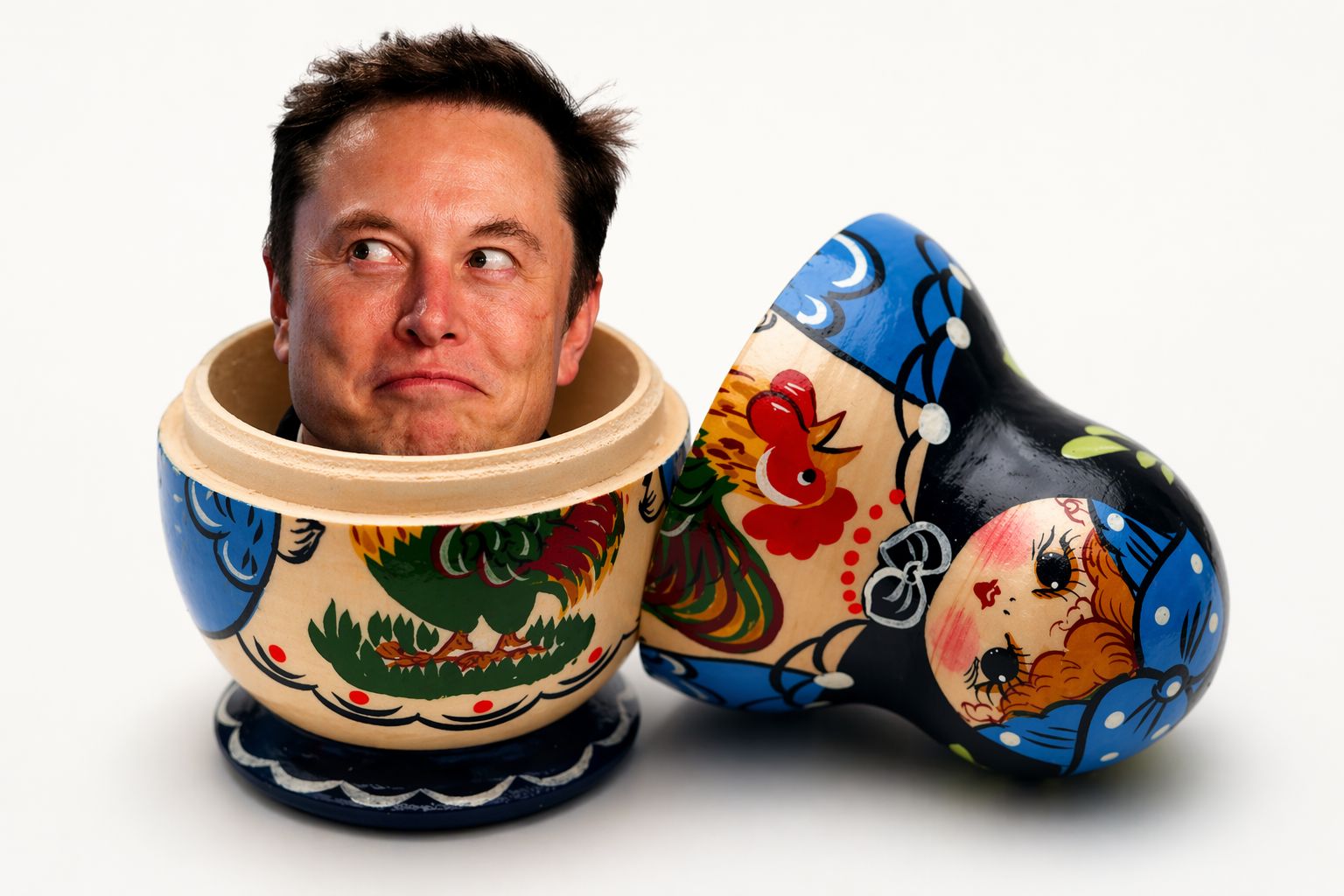
In 1900, Russia brought a wooden doll to the Paris World Exhibition that nobody had seen before.
From the outside, a painted peasant woman in a traditional sarafan dress, rosy cheeks, a headscarf. Unremarkable.
But you twisted it open… another doll. Identical in design, smaller in size.
Then opened that one too. And another. Seven dolls total, each one hiding the next, all the way down to a tiny baby carved from a single piece of wood.
The craftsmen who made it had one goal in mind — to surprise.
The doll won a bronze medal. Within a decade, the whole world wanted one. The Russians called it Matryoshka — from Matryona, an old name meaning “little mother.”
The idea was simple: the outer layer is never the whole story. There is always something inside you didn’t know was there.
This week, Elon Musk opened his Matryoshka.
And Wall Street is still counting the dolls.
Here’s the story ⇩
SPONSOR BREAK presented by PriorityGold*
Leaked: Apple’s Secret “Project Mulberry” Could Shake Up $9 Trillion Industry
Bloomberg has unveiled details of Apple’s ultra-classified “Project Mulberry,” a 13-year endeavor Tim Cook hails as “Apple’s greatest contribution to mankind.” Hidden in their supply chain, an obscure company produces a revolutionary chip—smaller than a grain of sand. BlackRock holds 2.8 million shares, while Goldman Sachs boosted its stake by 340%. Act fast—this $30 stock may soar soon. Tech expert Ian King has the full story here…
Tesla’s Matryoshka
Tesla just reported Q1 earnings that beat Wall Street expectations across the board.
→ Revenue came in at $22.39 billion against $22.08 billion expected.
→ EPS hit $0.41 against $0.35 expected.
→ Gross margin landed at 21.7% against 17.7% estimated.
→ The stock jumped 3.9% after hours.
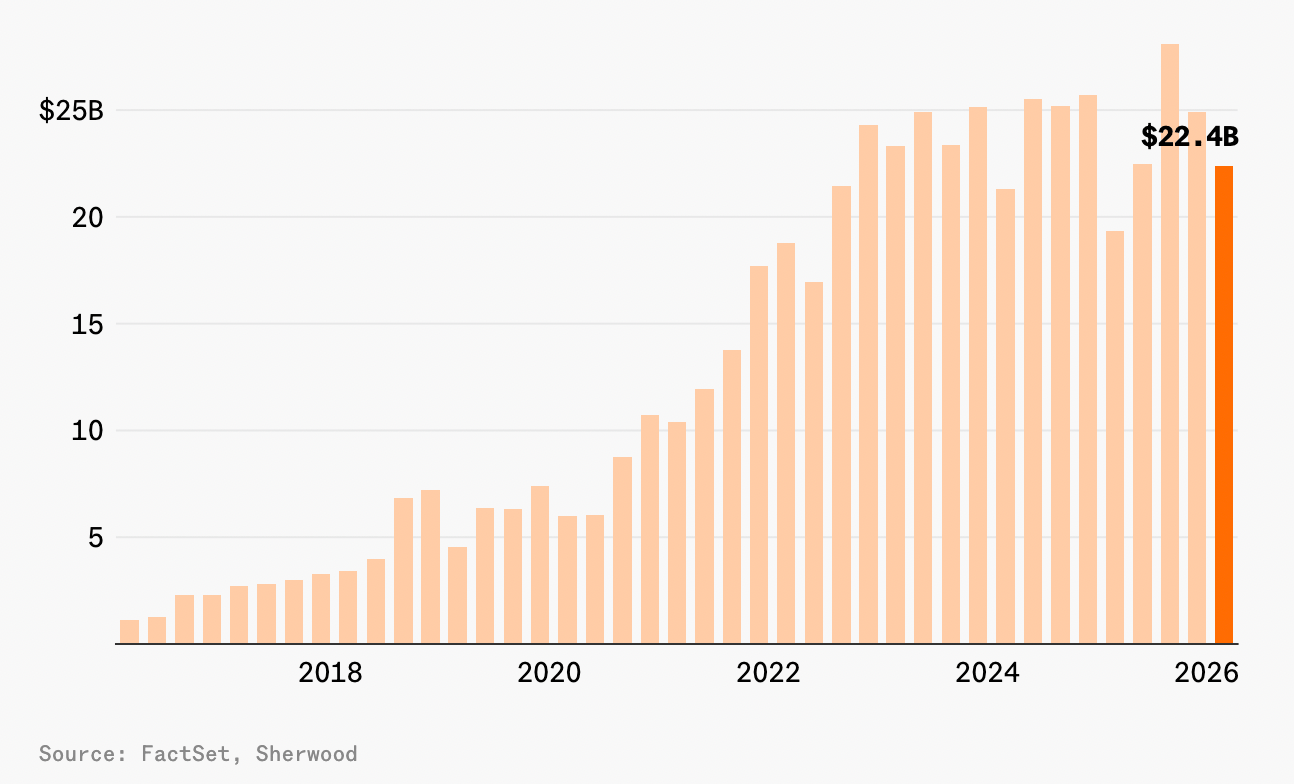
From the outside, that looks like a clean win.
Open it.
1 The core auto business delivered 358,023 vehicles globally — down from expectations, though Tesla blamed an unusually low comparison quarter due to the Model Y changeover.
→ Revenue is still down 9% year over year.
The cheapest Tesla on the market costs $35,000. A cheaper model is reportedly coming, but hasn’t arrived yet.
2 The Robotaxi service expanded to Houston and Dallas this week. Unsupervised. No safety driver. Which sounds a genuine breakthrough until you find out there is currently one car in each city.
One car.
3 Tesla is projecting capital expenditure of over $20 billion this year — more than double last year’s $8.5 billion.
→ Free cash flow is expected to go negative.
The spending is going toward:
→ Cybercab production,
→ Optimus robots,
→ AI compute,
→ new batteries, and
→ a chipmaking facility called Terafab in Austin, Texas.
Musk announced Tuesday that Tesla had completed the final design stage — “taping out” — for its upcoming AI5 chip. The chip is destined for future EVs, massive training clusters, and Optimus robots. Tesla’s own sources told Bloomberg the facility won’t begin manufacturing silicon until 2029.
The outer doll looks great.
The ones inside are still being carved.⇩
SPONSOR BREAK presented by BanyanHill*
Hate It Or Love It — Fortunes Will Be Made From This…
President Trump just signed a highly controversial new law — S.1582.
With one stroke of the pen, he’s unleashed the most radical change to America’s money in over 100 years.
Investors who understand what’s happening and position themselves now could make as much as 40X their money by 2032.
While the rest will be left scrambling in the dust, wondering how they missed it.
Go here now for details— before the wealth transfer begins on June 11th.
$9 Billion Sidequest.
SpaceX announced this week it has sealed the right to acquire Cursor — one of the fastest growing AI coding tools in the world — at a valuation of $9 billion.
A rocket company → buying a coding AI.
The deal structure is unusual even by Musk standards.
→ SpaceX gets the right to acquire Cursor later this year.
→ If the acquisition doesn’t happen, Cursor pays SpaceX $10 billion for their work together.
Either way, SpaceX wins.
Now, let’s open the doll…
SpaceX is preparing for what could be the largest IPO in American history — targeting a valuation of $1.5 trillion this summer.
In the months leading up to that IPO, Musk is acquiring:
→ a coding AI startup,
→ rebuilding xAI from the ground up after saying it “was not built right first time around,” and
→ pivoting SpaceX’s entire stated mission toward space-based data infrastructure and AI computing.
This is unusual pre-IPO behavior. Most CEOs spend the months before a public offering projecting stability, focusing on core business, and avoiding anything that might spook institutional investors.
Musk is doing the opposite.
The rocket company – the mother doll. → Inside it is an AI company. → Inside that is… nobody really knows what’s in the last doll.
That’s the whole point.
SPONSOR BREAK presented by OxfordClub*
How Mitt Romney Turned $450K Into Up to $100 Million (Tax-Free)
It wasn’t stocks. It wasn’t real estate. It was a little-known investment vehicle that turned Mitt Romney’s $450,000 into as much as $100 million and Peter Thiel used to turn $2,000 into $5 billion within two decades. Now, thanks to a new executive order, regular Americans can access the same type of investment. Get more details here >>
The Metamorphosis…
SpaceX started as a rocket company with one mission: make humanity multiplanetary. That mission made Musk a legend, attracted the best aerospace engineers on Earth, and turned SpaceX into the dominant force in commercial space travel.
Now, with the IPO approaching, the mission is quietly expanding.
And each layer you open reveals a different company than the one on the outside.

The market is being asked to value SpaceX at $1.5 trillion. (For context, Boeing’s entire market cap: $97 billion)
$1.5T is a bet on whatever is inside the next doll.
How many are left? Nobody knows.
SPONSOR BREAK presented by StansberryResearch*
Why are companies flying spy planes over Elon’s closely-guarded AI lab?
Elon did the seemingly impossible – far faster than anyone expected… And it’s sent the tech industry into PANIC MODE. ChatGPT, Claude, Google Gemini, and DeepSeek could soon become obsolete. And three little-known firms could soar 10X or higher as a result.
The Doll With No Bottom.

The whole point of Matryoshka is that there is always something inside you didn’t expect.
Musk has been building them his entire career.
Tesla was supposed to be a car company. Inside it was an energy company, a battery company, a robotics company, and now a chipmaker.
SpaceX was supposed to be a rocket company. Inside it is Starlink, xAI, a coding AI acquisition, and a $1.5 trillion IPO.
Twist it open. There’s always another one.
Don’t forget to to cast your vote 👇
Lesson Of The Day:

Was this email forwarded to you? Don’t miss out on future stories — subscribe using the button below.
Also, help your friends blossom this spring! Share us with them.
💬 We Want To Hear Your Story:
Got a market or stock you want us to analyze next?
Just drop your request in the comments here.
P.S. – If you no longer want to receive occasional emails from us and you want to unsubscribe, click here 👉 “Unsubscribe” . Thank you!
Washington Just Kissed A Toad.
Turns out the prince was in the Sonoran Desert the whole time.

In Grimm’s fairy tale, the princess kisses the toad. And it turns into a prince.
For sixty years, psychedelics have been the toad of the medical world. It was sixty years of stigma, until….
Last Saturday, Washington kissed the toad.
President Trump signed an executive order fast-tracking research and FDA approval for psychedelic treatments. The whole spectrum — mushrooms, plants, toads.
And the prince showed up immediately. Stocks across the entire sector exploded before the ink was dry.
But here’s what makes this story genuinely interesting…
The toad was already turning into a prince before anyone in Washington paid attention.
Here’s the story ⇩
SPONSOR BREAK presented by BanyanHill*
Hate It Or Love It — Fortunes Will Be Made From This…
President Trump just signed a highly controversial new law — S.1582.
With one stroke of the pen, he’s unleashed the most radical change to America’s money in over 100 years.
Investors who understand what’s happening and position themselves now could make as much as 40X their money by 2032.
While the rest will be left scrambling in the dust, wondering how they missed it.
Go here now for details— before the wealth transfer begins on June 11th.
But First…

Most people think psychedelics are a 1960s counterculture story.
Hippies. Woodstock. Tie-dye. That’s not where this started.
In the 1950s, psychedelics were legitimate medicine.
Psilocybin was being studied at Harvard. LSD was being tested by major research institutions across the US and Europe. The CIA was running its own experiments. Therapists were using these compounds with patients and reporting results that conventional medicine couldn’t come close to matching — dramatic improvements in depression, anxiety, addiction, and PTSD.
The research was serious and funding was flowing.
Then the counterculture happened.
Psychedelics escaped the labs and became the symbol of everything the establishment was trying to suppress. The anti-war movement. The rebellion. Timothy Leary telling an entire generation to “tune in, turn on, drop out.” Overnight, the drugs went from promising medicine to political liability.
Nixon declared a War on Drugs. The Controlled Substances Act of 1970 threw everything into Schedule I — the same category as heroin.
→ No accepted medical use.
→ No research.
→ No funding.
Scientists who had spent years building promising results had to walk away overnight.
The NIH actually funded ibogaine research in the 1990s — and then quietly shut it down over cardiovascular concerns, leaving the work unfinished.
So the compounds stayed in nature – in mushrooms, in plants, in a toad that lives in the American Southwest. And an entire field of medicine spent thirty years frozen.
Until…
2019, when Mike Tyson went on Joe Rogan’s podcast.⇩
SPONSOR BREAK presented by PriorityGold*
A legal loophole still allows you to move your 401(k) or IRA into a stronger, tax-free zone—before the next wave of chaos hits.
Click here to learn how to shield your money now
Because when the rules break, the rich rewrite them.
You need to make your move before they do.
The Toad That Started It All Over Again.

credit: Metro
In 2019, Tyson told the world he had been smoking secretions from the Sonoran Desert toad — a creature that lives in the American Southwest and naturally produces a substance called 5-MeO-DMT.
People started calling it “the God molecule.” Effects kick in within 30 seconds. The whole experience is over in 20 minutes. Tyson said it cured his depression, his trauma, his addiction.
Researchers got curious. Celebrity after celebrity started sharing similar stories.
→ The New York Times covered it.
→ GQ covered it.
!!! And the National Park Service issued an official warning telling Americans to stop licking the toad.
SPONSOR BREAK presented by StansberryResearch*
Why are companies flying spy planes over Elon’s closely-guarded AI lab?
Elon did the seemingly impossible – far faster than anyone expected… And it’s sent the tech industry into PANIC MODE. ChatGPT, Claude, Google Gemini, and DeepSeek could soon become obsolete. And three little-known firms could soar 10X or higher as a result.
The Science That Was There All Along.
→ Psilocybin grows in mushrooms used in indigenous ceremonies for centuries. → Ibogaine comes from the iboga plant, used in spiritual rituals in Central Africa for generations.
→ 5-MeO-DMT is secreted naturally by the Sonoran Desert toad.
When scientists quietly restarted the research in the 2010s — picking up exactly where Nixon forced them to stop — the results were hard to ignore.
→ A 2013 study found psilocybin genuinely beneficial for PTSD patients.
→ A 2016 trial showed it could treat anxiety and depression.
The data kept coming — not from fringe researchers, but from Johns Hopkins and NYU.
Psychedelics work completely differently. Early trials showed patients reaching remission in days — sometimes after a single afternoon session. A large-scale study published in Nature Medicine found that psychedelics reconfigure brain networks in ways conventional antidepressants simply cannot replicate.
The FDA noticed. In 2019 they approved a ketamine-based nasal spray called Spravato for treatment-resistant depression. It’s doing $2 billion in sales this year.
SPONSOR BREAK presented by OxfordClub*
How Mitt Romney Turned $450K Into Up to $100 Million (Tax-Free)
It wasn’t stocks. It wasn’t real estate. It was a little-known investment vehicle that turned Mitt Romney’s $450,000 into as much as $100 million and Peter Thiel used to turn $2,000 into $5 billion within two decades. Now, thanks to a new executive order, regular Americans can access the same type of investment. Get more details here >>
The Spectrum.

1 Psilocybin — from mushrooms.
The most studied. The closest to approval. Compass Pathways CMPS ( ▼ 2.38% ) is leading the race with COMP360, a pharmaceutical-grade synthetic version being tested for treatment-resistant depression, PTSD, and anorexia. They expect to be launch-ready by end of 2026 — potentially the first psychedelic formally approved by the FDA.
Their second late-stage trial met its primary endpoint earlier this year.
2 Ibogaine — from plants.
The one Trump specifically named in the executive order. Used in other countries to treat PTSD in veterans for years.
Governor Greg Abbott signed a $50 million Texas research bill in June 2025. !!!
!!! Controversial because of cardiovascular risks — irregular heart rhythms, linked to deaths in uncontrolled settings. Which is exactly why moving it into controlled clinical environments matters.
3 5-MeO-DMT — from the Sonoran Desert toad.
The God molecule. The one Tyson smoked.
GH Research GHRS ( ▼ 4.93% ) is developing an inhaled version called GH001 — effects within minutes, full session complete within an hour, early trials showed rapid reduction in depressive symptoms.
AtaiBeckley ATAI ( ▼ 1.53% ) , backed by Peter Thiel, is developing BPL-003, an intranasal version with similar rapid-acting results.
Both are advancing toward Phase 3 trials.
Three completely different substances. Three completely different mechanisms. All pointing in the same direction…
The Text Message.

So how did seventy years of history land on the president’s desk last Saturday?
Joe Rogan texted President Trump about ibogaine.
Trump read it. His response, from the Oval Office, with Rogan sitting next to him:
“Sounds great. Do you want FDA approval? Let’s do it.”
That’s the whole origin story of what is now official US government policy.
A text message.
And seventy years of underground medicine just got a fast pass to the front of the FDA queue.
FDA Commissioner Marty Makary announced priority review vouchers — dramatically accelerated approval timelines — would be issued to three psychedelic treatments this week.
Monday, the market didn’t wait for the details.
→ Compass Pathways +38.9%
→ AtaiBeckley +31%
→ GH Research +20.9%
→ Definium Therapeutics +9.7%
→ Enveric Biosciences +187%
!!! Institutional money is flooding into a space that has been dominated entirely by retail investors for years.
→ Deutsche Bank and Morgan Stanley have both initiated coverage of psychedelic biotechs — firms that wouldn’t have gone near this sector two years ago.
The toad sat in the mud for seventy years.
→ Scientists found it in the 1950s and called it medicine.
→ Politicians took it away in 1970 and called it dangerous.
→ Some people licked it anyway. (don’t do this)
→ The National Park Service told them to stop.
Last Saturday, the White House kissed it.
The prince is getting dressed.
Don’t forget to to cast your vote 👇
Lesson Of The Day:

Was this email forwarded to you? Don’t miss out on future stories — subscribe using the button below.
Also, help your friends blossom this spring! Share us with them.
💬 We Want To Hear Your Story:
Got a market or stock you want us to analyze next?
Just drop your request in the comments here.
P.S. – If you no longer want to receive occasional emails from us and you want to unsubscribe, click here 👉 “Unsubscribe” . Thank you!
Oops, We Did It Again.
Sometimes the wrong turn is worth $32 billion.

Bravo 👏
It was a practice round at 2020 Augusta National.
The tradition at The Masters is simple: players try to skip their tee shot across the pond in front of the green. You aim low, you hope it bounces, you try to land it somewhere on the putting surface. Most shots skip once or twice and die in the water. That’s the expected outcome. That’s physics.
Jon Rahm‘s ball skipped four times. It kicked to the back of the green. It fed down the slope. And then — in front of exactly nobody, because it was a Tuesday practice round with no crowd — it dropped into the hole.
A hole-in-one. Off a water skip.
He did something that had no business working.
Here is the thing about the skip shot: it only works if the ball goes somewhere it wasn’t supposed to go. The trajectory is wrong by design. The landing zone is technically an error.
And yet, sometimes, the wrong path is the only one that ends in the hole.
Today, I found four stories across the market, and every single one of them involved something that launched correctly — and landed somewhere completely different than planned.
Three of them landed in the water. One of them found the hole. ⇩
SPONSOR BREAK presented by OxfordClub*
How Mitt Romney Turned $450K Into Up to $100 Million (Tax-Free)
It wasn’t stocks. It wasn’t real estate. It was a little-known investment vehicle that turned Mitt Romney’s $450,000 into as much as $100 million and Peter Thiel used to turn $2,000 into $5 billion within two decades. Now, thanks to a new executive order, regular Americans can access the same type of investment. Get more details here >>
Aimed For Orbit. Hit The Pond.
Elon has 9,500+ satellites circling the planet. If one goes sideways, he launches three more next Tuesday before lunch.
AST SpaceMobile is playing a completely different game – and honestly, it’s a bolder one.
Their whole thesis: you don’t need thousands of satellites if each one is smart enough. Fewer than 100 large, powerful birds, each doing the work of hundreds of Starlink satellites. Less clutter. More muscle. Zero margin for error.
So when BlueBird 7 launched Sunday aboard Blue Origin’s New Glenn rocket, every single thing had to go right.
The plan was simple: reach low-Earth orbit, join the constellation, get one step closer to beating Starlink at its own game. The satellite separated cleanly. It powered on. And then Blue Origin’s upper stage delivered it to completely the wrong address.
Too low to sustain operations. Too low to fix with the onboard thrusters. Too low to save.
De-orbited by end of week. Gone. ⇩
→ ASTS ( ▼ 5.3% ) today
→ Negative YTD — after being up 270% over the past year
→ Still targeting 45 satellites by year-end
→ BlueBird 7 was supposed to be number eight
Meanwhile, Blue Origin actually had a great day.
New Glenn flew again AND they successfully reused the rocket for the first time ever – a milestone Bezos has been chasing for years.
So Bezos pops champagne for the reuse milestone. And AST SpaceMobile files an insurance claim.
The company’s whole pitch is bringing 5G broadband internet to your regular, unmodified cell phone. No special hardware or dish on your roof.
To pull that off, every single satellite has to reach the right orbit and do its job.
BlueBird 7 was supposed to be number eight. Instead it’s becoming space debris by the end of the week.
One wrong bounce. Short of the green.
SPONSOR BREAK presented by StansberryResearch*
Elon Musk Just Did Something He’s Never Done Before
This February, Elon spent millions to send a message to 125 million Americans. Most people ignored it. But Wall Street veteran Whitney Tilson couldn’t stop thinking about it, and says what Elon was really saying explains everything about what’s unfolding in America’s economy right now.
He’s sharing his full analysis, free, here.
Teed Up In Austin. Landed In Amsterdam.
Tesla’s federal tax bill last year was $0.
Not “close to zero.” Not “minimized through credits.” Zero. Nothing. Nada.
For the second year in a row.
Now, part of that is boring and legal – past losses and green energy credits can eat a tax bill down to zero. The system working as designed. Fine.
But Reuters dug deeper. And what they found is where it gets interesting.
Tesla routed $18 billion in profits through paper-only subsidiaries in the Netherlands and Singapore. Companies that exist on paper, hold intellectual property rights, do absolutely nothing, and sit in tax-friendly jurisdictions. The move saved Tesla an estimated $400 million in US taxes. Entirely legal. Completely standard corporate playbook.
The ball launched from Austin. It landed in Amsterdam.
→ Tesla Q1 earnings drop Wednesday
→ Revenue expected: $22.08 billion – down 9% year over year
→ Robotaxi “expansion” this week: 1 unsupervised car per new city
The skip shot is in the air. Wednesday’s earnings call is the landing.
SPONSOR BREAK presented by BehindtheMarkets*
Mark this date: May 29th, 2026. While the media is distracted by the latest headlines out of Iran, a 90-year-old federal law is quietly closing a trap on Wall Street’s biggest bullion banks.
For 55 years, they’ve sold “paper gold” they didn’t actually have.
But on May 29th, the legal “First Notice” deadline hits.
It’s the moment of truth where paper promises must turn into physical bars—bars that the London and Shanghai vaults simply do not have.
When the “Paper Leash” snaps, gold won’t just move… it will teleport.
I’ve identified one “Shadow Miner” sitting on a “King’s Vault” of physical metal that could surge 1,000% as the paper market defaults.
See the 90-year-old law and the ticker symbol here >>>
All setup. No swing.
Rick Perry used to run the Department of Energy. The department responsible for America’s nuclear arsenal. The department that oversees the entire US energy grid. He knew every regulator, every contractor, every room where the important decisions get made.
So when he co-founded Fermi — a company planning to build nuclear infrastructure to power data centers — it sounded like a layup.
→ AI is hungry for energy.
→ Nuclear is the only power source that can actually feed it.
Perry has the Rolodex. What could go wrong?
This week we found out.
1 The CEO left Friday.
2 The CFO left today.
The company responded by calling it “Fermi 2.0” — which is either very confident or very desperate. We’re going with the latter.
→ FRMI ( ▼ 17.56% ) today
→ Down 75% from its IPO price (went public October 2025)
Fermi’s whole business plan was to build a massive power site in Amarillo, Texas — they called it Project Matador — lease it to data center operators hungry for clean nuclear energy.
The problem is they built it before finding anyone to lease it to.
In September they finally got a tenant interested — a nonbinding letter of intent to lease part of the site. Three months later, in December, that tenant walked away.
So right now Fermi has a power site in Texas, a mounting construction bill, zero customers, zero revenue, no CEO, and no CFO.
They built the course. Nobody showed up to play.
SPONSOR BREAK presented by Paradigm*
Tiny $2 Mining Stock 2X Bigger Than Barrick?
Barrick is one of the largest mining companies in the world, with a value of nearly $100 billion.
Since its IPO several decades ago, Barrick shares have risen by as much as 54x – enough to turn a $2,500 investment into $135,000.
Yet as great as that is, Barrick’s results might be dwarfed over time by this much smaller $2 gold stock.
While Barrick has reserves of 86 million ounces of gold, this tiny gold play is sitting on the equivalent of 161 million ounces.
That makes it almost 2X bigger than Barrick!
But despite that, this virtually unknown stock is just 1/100th the size of Barrick.
After July 1, however, everything could change practically overnight for this tiny $2 gold play.
And investors could see a tiny stake grow by 10X or more over the next few months alone. Click here to learn the urgent details.
The Wrong Shot. The Right Hole.
Before Charlie Ergen built a satellite empire, he was a professional poker player.
In the 1980s he bet everything on satellite TV. By 2015 he was worth over $20 billion. Then cord-cutting came for him – slowly, then all at once.
Subscribers vanished and stock collapsed. By the early 2020s his net worth had dropped below $1 billion. The empire was shrinking.
So Ergen did what any good poker player does when the cards turn bad.
He didn’t fold. He bluffed.
He spent billions buying up wireless spectrum – the invisible highway that carries cellular data – without a real plan to develop it. Hoping something would eventually make it valuable.
Regulators got impatient. The FCC started asking whether he’d actually built anything with it. His company EchoStar was staring down a possible bankruptcy.
Then SpaceX called.
Turns out Elon needed exactly what Ergen had been sitting on. SpaceX’s Starlink was expanding into direct-to-cell service — letting regular phones connect to satellites without any special hardware. To do that at scale, they needed terrestrial spectrum. The exact kind Ergen had spent years hoarding.
And SpaceX paid $17 billion for it.
→ Deal structure: $8.5 billion cash + $8.5 billion in SpaceX stock
→ Follow-on deal: another $2.6 billion in SpaceX stock for additional spectrum
→ EchoStar now holds $11.1 billion in SpaceX stock — valued at $212/share when the deal closed
→ SpaceX is now targeting a $1.5 trillion IPO valuation this summer
→ Current SpaceX private market price: ~$610/share
→ Ergen’s stake today: potentially worth $32 billion
→ His net worth when SpaceX came calling: under $1 billion
He aimed at wireless. He missed. He nearly went bankrupt. And then the thing he missed turned out to be sitting right next to the hole.
That’s the skip shot.
Know Your Pond.

Nobody skips the pond and expects the ball to find the cup. The whole tradition exists because the outcome is unpredictable — and unpredictable is entertaining.
Your edge isn’t always knowing where to aim. Sometimes it’s knowing which skips to follow — and which ones to watch sink.
Don’t forget to to cast your vote 👇
Lesson Of The Day:

Was this email forwarded to you? Don’t miss out on future stories — subscribe using the button below.
Also, help your friends blossom this spring! Share us with them.
💬 We Want To Hear Your Story:
Got a market or stock you want us to analyze next?
Just drop your request in the comments here.
P.S. – If you no longer want to receive occasional emails from us and you want to unsubscribe, click here 👉 “Unsubscribe” . Thank you!
$6.86. Grill’s Already On.
There is nothing better than a Saturday burger.

It’s even more in my area… 😬
You’re standing in the meat aisle. Ground beef, $6.86 a pound. You’ve done this calculation before — last month it was $6.71, the month before that $6.58. You know it’s going up. You’ve known for a while.
You buy it anyway.
So does your neighbor. So does the guy behind you. So did 330 million Americans last year, collectively spending $45 billion on beef — 12% more than the year before. Not 12% more beef. Just 12% more dollars for roughly the same amount of meat.
In economics, there’s a word for something that laughs in the face of its own price tag. We’ll get to that. First, let’s talk about what’s actually happening to the food on your plate — and what it’s quietly telling us about everything else moving in the commodity markets this week.
Here’s what’s actually going on. ⇩
SPONSOR BREAK presented by StansberryResearch*
Elon Musk Just Did Something He’s Never Done Before
This February, Elon spent millions to send a message to 125 million Americans. Most people ignored it. But Wall Street veteran Whitney Tilson couldn’t stop thinking about it, and says what Elon was really saying explains everything about what’s unfolding in America’s economy right now.
He’s sharing his full analysis, free, here.
Herd Mentality… Except There’s No Herd.
1 US beef consumption in 2025: up.
2 US cattle inventory in 2025: the lowest it has been in 75 years.

The Department of Agriculture counted just 86.2 million cattle and calves in the US as of January 1. That’s 7.4 million fewer than 2021.
The national herd has been quietly shrinking for years while the national appetite has been loudly growing.
→ Average price of ground beef March 2026: $6.86/lb
→ All-time high: $6.89/lb (February 2026)
→ Price increase over five years: +48%
→ US beef spending in 2025: $45 billion
→ Actual volume increase year over year: just 4%
→ People-to-cattle ratio in 1980: 2 to 1
→ People-to-cattle ratio today: 4 to 1
In short, for every cow in America today, there are four people waiting to eat it.
In 1980 there were two.
So why is the herd shrinking? A few things happening at once:
→ historically dry conditions destroying grazing land,
→ mounting fertilizer and equipment costs,
→ and consolidation among meat processors making it harder for smaller ranchers to survive.
The “protein-maxxing” era, the carnivore diet wave, the FDA’s quiet nod toward beef tallow – beef has stopped being just dinner and started being an identity. And identities, as any trader will tell you, are the most inelastic thing on earth.
I knew it was expensive… but I bought it anyway 🙂
SPONSOR BREAK presented by OxfordClub*
How Mitt Romney Turned $450K Into Up to $100 Million (Tax-Free)
It wasn’t stocks. It wasn’t real estate. It was a little-known investment vehicle that turned Mitt Romney’s $450,000 into as much as $100 million and Peter Thiel used to turn $2,000 into $5 billion within two decades. Now, thanks to a new executive order, regular Americans can access the same type of investment. Get more details here >>
Good Vibes Only. Except In Kansas.
Thursday, K.C. July wheat hit a one-year high. The ceasefire was holding. Oil was falling. Everyone was feeling pretty good about the week.
Four hundred miles west of the Chicago Board of Trade, nobody was celebrating.
→ K.C. July wheat (KWN26): settled at $6.50/bushel, down 5 cents Friday
→ CBOT July soft red winter wheat: $5.99¼/bushel, down 7¼ cents
→ Weekly gain regardless: +3.2%
→ USDA crop condition report: Monday morning, before the open
Traders booked profits and logged off for the weekend. Reasonable decision.
Futures markets price probabilities. When the ceasefire held Friday, traders pulled out the risk premium they’d been carrying all week — the one that drove wheat to a one-year high on Thursday.
On paper, that makes sense. Geopolitical risk eased. Price adjusted.
But the risk premium in wheat this week wasn’t really about the Strait of Hormuz. It was about a drought that has been doing damage since February.
Those are two different problems. The market solved one and went home for the weekend. The other one is still running.
Tobin Gorey, founder of agricultural consultancy Cornucopia, summarized the state of the crop in four words this week: “It’s losing yield.” Present tense. And he is someone standing close enough to smell the dry soil.
The frost arriving Saturday morning will add to it. Late April rain may ease the stress eventually – but yield lost to weeks of dry conditions doesn’t recover on a weather forecast. What’s gone is gone.
Monday’s USDA report will put numbers on what the fields already know. The market will react to those numbers as if they’re new information.
They won’t be.
SPONSOR BREAK presented by Paradigm*
Which Side of the AI Wealth Gap Will You Be On?
AI is about to split America into two over the next 12 months…
On one side, it’ll make America’s one-percenters richer and more powerful than ever…
But on the other side, it’s set to trap millions of hardworking Americans in financial quicksand…
One ex-hedge fund manager whose team predicted NVIDIA’s rise in 2020 calls this the “AI End Game”…
And he says there are three critical moves every American should make in the next 12 months to protect and grow their wealth through this paradigm shift…
CLICK HERE TO SEE THE DETAILS BEFORE IT’S TOO LATE
Too Much+Too Sweet=Too Bad.
Sugar hit a five-year low this week. Third consecutive week of losses. The price has been sending a very clear message for months now.
Brazil hasn’t gotten it yet.
→ Raw sugar SB1!: settled at 13.31 cents/lb, down 2.6% Friday
→ Five-year low hit intraday: 13.22 cents/lb
→ Weekly loss: -3.2%
→ White sugar SF1!: $412.30/metric ton, down 1.4%
→ Brazil’s 2025/26 sugarcane harvest forecast: 673 million tons (raised 1%)
→ Front-month white sugar expiry: record ~500,000 tons delivered
When a record volume gets dumped at expiry, it means the sugar couldn’t find a better price anywhere in the physical market. Nobody wanted it at a premium.
Brazil’s response? Raising its harvest forecast.
Brazilian cane mills produce either sugar or ethanol. When oil prices fall, ethanol stops making sense. The cane goes to sugar instead. This week, oil fell hard.
You can guess the rest.→ Same oversupplied market getting more oversupplied.
And while Brazil is all in, the world is opting out. The global food consumption patterns are moving away from sugar. Less of it in diets. Less of it in products.
The price keeps falling. Brazil keeps harvesting.
And the signal keeps getting ignored.
(Some things just don’t respond to price. We’ll get to that.)
SPONSOR BREAK presented by InvestorPlace*
America’s New AI “Mega Computer” to Span an Area Bigger than the State of Texas
The AI boom has been stalled for months. But according to legendary tech investor Louis Navellier, that’s about to change. The world’s first AI “Mega Computer” — Golden Dawn — will come online in 2026. It will cover a territory larger than the state of Texas… and be more than 1 trillion times more powerful than Elon Musk’s Colossus. This company’s building it right now.
Click here for the full story.
This ad is sent on behalf of InvestorPlace Media at 1125 N. Charles Street, Baltimore, Maryland 21201. If you’re not interested in this opportunity, please click here.
Panic Bought It. Logic Kept It.
The gold playbook ran exactly on schedule this week.
→ Spot gold: $4,861.32/oz, up 1.5% Friday
→ Weekly gain: +2%
→ Next level being watched: $5,000/oz
→ Spot silver: $81.71/oz, up 4.2% Friday, up 7%+ for the week
→ Platinum: +1.6%
→ Palladium: +1.6%
Two things happened this week that should have pushed gold down.
1 The Strait of Hormuz reopened. The geopolitical pressure that sent investors into gold in the first place partially lifted. Oil fell. Inflation fears eased. Rate cut expectations came back.
By every conventional signal, the trade that drove gold higher was unwinding.
2 And then India – one of the world’s largest gold consumers – halted imports. Banks stopped placing orders with overseas suppliers. Tons of metal sitting at customs waiting on a government clearance order that hasn’t arrived.
A major source of physical demand, temporarily pulled from the market.
Less geopolitical fear. Less physical demand. Gold should have pulled back.
It went up 1.5% ▲ on Friday. Up 2% ▲ for the week. Peter Grant at Zaner Metals is already watching $5,000 per ounce as the next level.
Underneath both of them? A world that has been accumulating uncertainty for long enough that one good week doesn’t move the needle.
Fear has no elasticity.
SPONSOR BREAK presented by Paradigm*
Tiny $2 Mining Stock 2X Bigger Than Barrick?
Barrick is one of the largest mining companies in the world, with a value of nearly $100 billion.
Since its IPO several decades ago, Barrick shares have risen by as much as 54x – enough to turn a $2,500 investment into $135,000.
Yet as great as that is, Barrick’s results might be dwarfed over time by this much smaller $2 gold stock.
While Barrick has reserves of 86 million ounces of gold, this tiny gold play is sitting on the equivalent of 161 million ounces.
That makes it almost 2X bigger than Barrick!
But despite that, this virtually unknown stock is just 1/100th the size of Barrick.
After July 1, however, everything could change practically overnight for this tiny $2 gold play.
And investors could see a tiny stake grow by 10X or more over the next few months alone. Click here to learn the urgent details.
Back in the meat aisle.

$6.86 a pound. I bought it anyway.
(It’s Saturday. The burger is already on the grill. No regrets. 🙂)
Beef: price up 48%▲ in five years. Americans kept buying.
In every single of our stories, price sent a signal. And something ignored it completely.
That something has a name: price inelasticity of demand.
The point where the relationship between price and behavior breaks down. Where people keep buying, keep producing, keep reaching for safety – regardless of what the market is telling them.
Enjoy Your Weekend !!!
Don’t forget to to cast your vote 👇
Lesson Of The Day:

Was this email forwarded to you? Don’t miss out on future stories — subscribe using the button below.
Also, help your friends blossom this spring! Share us with them.
💬 We Want To Hear Your Story:
Got a market or stock you want us to analyze next?
Just drop your request in the comments here.
P.S. – If you no longer want to receive occasional emails from us and you want to unsubscribe, click here 👉 “Unsubscribe” . Thank you!


